

While driving through Greenville, North Carolina, there’s a point where something doesn’t seem quite right. Not really in a bad way. It was more like being on a familiar street where a few things had been quietly moved. A cul-de-sac with brick homes that look like they belong there. There are seven cars parked in one driveway. A warehouse on the edge of an industrial park that doesn’t have a sign for the business in front of it. And far away, behind a line of trees, the sound of a controlled explosion that the county had told people about in an email that morning.
This is what the biggest YouTuber in the world looks like when they choose to stay home.
Jimmy Donaldson, better known as MrBeast, grew up in Greenville, North Carolina, a college town with about 88,000 people that is flat and cut off from the rest of the state by land. We saw his first video from his room here in 2012, when he was thirteen years old. His videos have been watched over 240 million times, making him the second most subscribed creator on YouTube. In the last year, he made about $82 million, according to Forbes. He was free to live anywhere. He always picks Greenville.
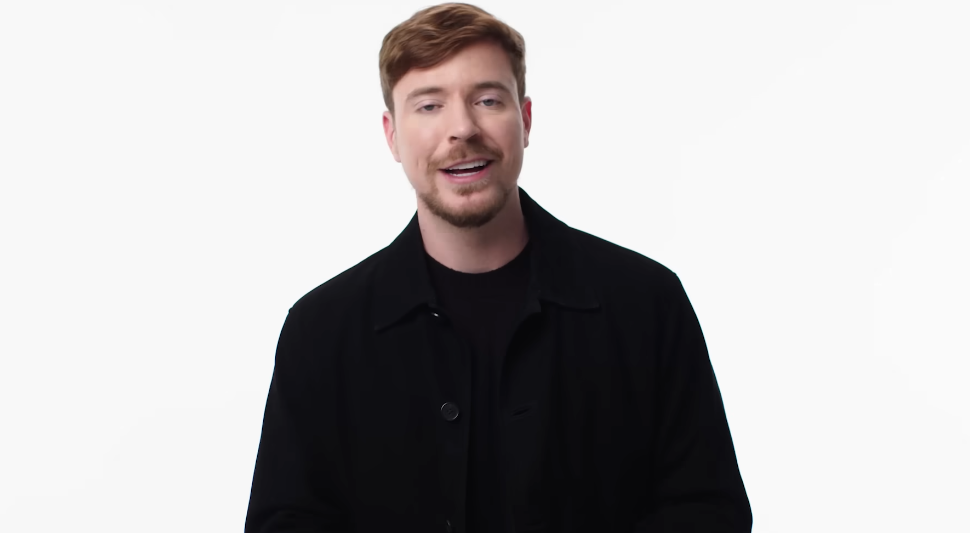
It began as a kid’s YouTube addiction and has grown into something that doesn’t have a clear name yet. People who live there call it “Beastville,” which is half funny and half seriously confusing. Donaldson’s business now has about 200 full-time employees and a rotating cast of construction contractors, extras, and $15-an-hour “task forces” hired to clean up after big shoots. A person in charge of regional economic development has started to list making YouTube videos as one of the city’s top industries, along with making drugs and forklifts. You wouldn’t have thought that sentence would come out five years ago.
The purchase in the neighborhood got the most attention and made people look twice. Since 2018, Donaldson has used a fake company to buy five homes on the same residential street. He has paid more than the going rate for each one and moved in friends, family, and employees. For the first 90 days, new employees can live in housing provided by the company. The house he bought in 2021 for $680,000 had been on the market for about half that amount four years before. Someone from down the block joked that he wished MrBeast had bought his house instead. When the news got out about the deal, critics called it a “company town.” In response, Donaldson wrote on social media, “Only I could get fired for giving people a place to live with no strings attached.”
Even though the set-up is clearly strange, it’s hard not to see his point. It’s not likely that this is similar to old-fashioned company towns, where workers lived in homes owned by their employers, spent their money at stores owned by their employers, and were kept dependent in a quiet way. It looks like these are real houses that are being given away for free with no strings attached. But the way it changes things is strange in ways that are worth thinking about. When your boss owns your neighborhood, work and personal life become less clear in ways that most employment contracts don’t expect.
Besides the homes, Donaldson has left a big mark on this area that is still growing. His company runs a $14 million production campus that is anchored by Studio C, a 50,000-square-foot warehouse where sets are built that look like a mix between a theme park and a movie set. His business bought a nearby 28-acre field in 2021. It bought an extra 95 acres last year. A few weeks ago, during the week, two watchtowers stood over a field with ramps, straw mounds, and a building that said “Bank.” Before the video comes out, no one outside the company knows what they’re for.
The pyrotechnics are their own ongoing deal with the neighborhood. Officials in Pitt County now send out “planned pyrotechnics” alerts via email and Facebook whenever explosions are used in filming. These alerts ask people not to call the police. Some people don’t get those alerts. A person who lived about a half mile from the shoot said that pictures were falling off her walls before dawn, and she said it felt like someone was driving a car into her house. In the end, county officials admitted that “unexpected delays” had made the production last much longer than planned. The rules have changed since then. It’s still being worked on.
But for many people in Greenville, the math has turned out to be firmly positive. A waitress in the area paid off her student loans with the $25,000 she won in a challenge. Someone else got a car. In two days, a bartender made $2,000 just by standing around in a numbered tracksuit and competing in a game like Squid Game. Together with Donaldson’s company, East Carolina University is creating a certified course in making YouTube videos. This course is meant to prepare new employees right away for work. People are really trying to make one person’s success a structural advantage for the area.
Greenville is changing into something truly new. It’s not a company town like they used to be, nor is it a tech campus like they have in Silicon Valley. It’s becoming something in between. A medium-sized city in the South is slowly orienting itself around the creative work of one person. No one in town seems eager to talk about whether or not that can last and what will happen if the algorithm ever stops rewarding MrBeast’s particular brand of spectacle. Right now, the jobs are real, the checks are real, and something is being built on the edge of the industrial park that no one can see yet.
