

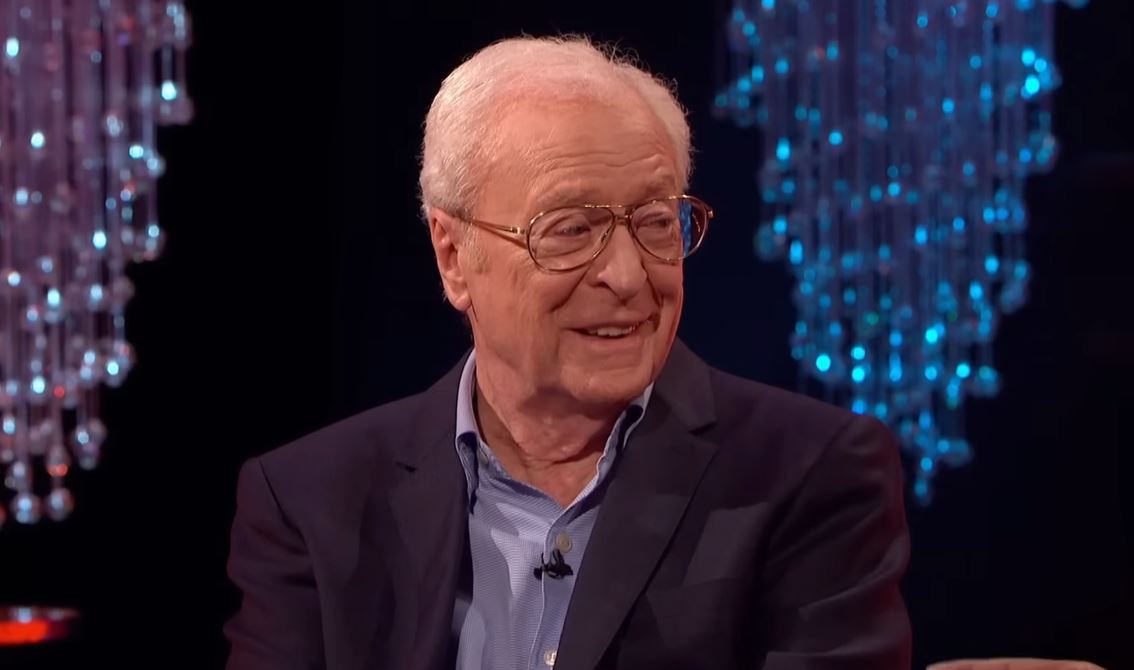
There’s something subtly peculiar about turning on a 13-hour audiobook and listening to Michael Caine—that distinct, warm, and measured South London lilt—take you through ancient Greece. It sounds just like him. It reminds me of him. Nevertheless, none of it took place in a recording studio.
ElevenLabs released an audiobook version of Homer’s Odyssey in late June 2026. The audiobook features an officially licensed artificial intelligence (AI) replica of Sir Michael Caine’s voice. The production, which runs about 13 hours and features a full supporting cast of AI-generated character voices, original music, and immersive sound design—all created using ElevenLabs’ own audio models—is the company’s first in-house audiobook under its ElevenProductions banner. The text is based on William Cullen Bryant’s translation from the 1870s rather than Emily Wilson’s highly acclaimed modern translation, which is the source of Christopher Nolan’s upcoming movie.
The timing is intentional. The audiobook is released as a companion piece to Nolan’s Odyssey, which is scheduled to hit theaters next month. It may also serve as an example of what AI audio can achieve with the right voice. If “choice” still has the same meaning as it once did, Caine, who has starred in eight of Nolan’s movies, is an obvious choice.
At the Red Sea Film Festival in December, 93-year-old Caine declared his retirement. According to some accounts, it was his fourth announcement of retirement. Prior to that, he discreetly joined ElevenLabs in November 2025, joining Matthew McConaughey as one of the most well-known actors to license his voice to the company’s Iconic Voice Marketplace. The marketplace allows approved celebrity voices to be rented for projects by studios, brands, and creators. Caine’s direct involvement in The Odyssey was mostly limited to consultation sessions that took place the year before, during which he refined the AI versions of his voice, improved its textures, and ensured that the replica met certain requirements. It is convincingly crossed, whatever that threshold may be.
“Bravo to him for recognising this is where technology is going,” stated Dustin Blank, who oversees partnerships at ElevenLabs. In a prepared statement, Caine called The Odyssey “one of the greatest stories ever told” and spoke warmly about the integration of digital tools with traditional storytelling.
What happens to those further down the chain is more difficult to discuss politely. According to the Guardian’s reporting, the supporting cast of voice actors whose voices appear throughout the audiobook were not given credit and were only made aware of their participation after the project was completed. The amount they were paid was determined by how many alphabetic letters their voice produced. It’s the kind of arrangement that, although technically compensated, seems to have been lost in translation; it’s a detail that sticks in the mind.
The tension in the industry as a whole is not subtle. Speaking at the same time, professional narrator Andy Richter succinctly described it: “It’s a little terrifying because it’s my livelihood and that of many people I respect.” It’s not hysteria. That’s a working professional observing the real-time restructuring of the surrounding market.
However, there is a case to be made for what ElevenLabs has created in this instance. Available for free, the Caine voice in the first chapter is remarkably realistic. Calm, thoughtful, bearing that familiar gravity without making fun of it. It sounds nothing like an impression. He seems to be having a very controlled day in front of the microphone. The audiobook industry is just starting to address the philosophical question of whether that qualifies as a performance.
ElevenLabs has ventured into the area before. An AI audiobook featuring Judy Garland’s voice reading The Wonderful Wizard of Oz was previously released by the company. Every project seems to be intended to push the boundaries of technology, taste, and what listeners will tolerate while simultaneously producing the kind of dialogue that is difficult to purchase with an advertising budget.
Perhaps this is just the way things are going, and Michael Caine, with his usual pragmatism, saw it before most of his contemporaries. It’s also possible that in a few years, something that seems innovative now will resemble the point at which a whole profession collapsed. There is no conflict between the two.
There is no doubt that the narrator of Homer’s tale, which is about a protracted journey home filled with bizarre encounters and gods pulling strings from above, is an odd fit. The voice of a legend, passing through servers and circuits to reach your earphones, sounds completely human. As it happens, the odyssey has taken on a new form.
