

Something quietly interesting about the way Mohamed Salah moves on the football field. Not the goals, since they’re clear, but the movement itself. They move their weight between steps in a way that makes defenders look like they’re reacting to something they already missed while they’re low to the ground and almost crouched. Some people think that his height has less to do with that than it really does.
Mohamed Salah is 1.75 meters tall, which is about 5 feet 9 inches. That number is agreed upon by most sources, such as Wikipedia and Transfermarkt. NFL.com says he is 5’9″ and 172 pounds. Some fan sites list it a little higher, at 177 cm, and one even says it’s 6 feet, which seems more like a typing mistake than a real measurement. The point is that Salah is not a huge person. He was never. But that doesn’t seem to have cost him much.
It’s interesting that 1.75m is the perfect height for a winger—not too short to get comments like some players do, but also not too tall to regularly win aerial duels. Salah is 34 years old and weighs between 71 and 72 kilograms, depending on the source. This gives him a slim, lean body that fits his style perfectly. His center of mass stays low. Cuts happen quickly. One of his best skills has always been speed, especially in the first three or four yards.
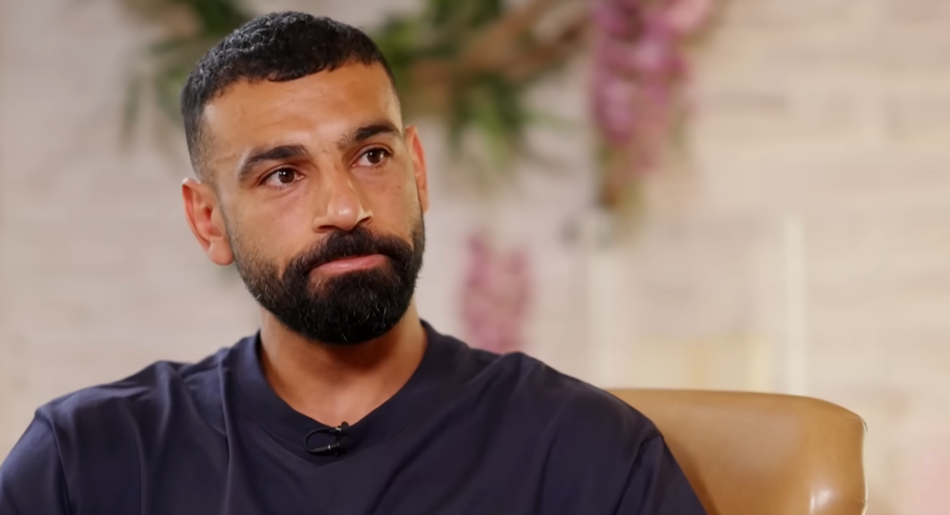
If you look at old videos of Salah at Basel or in his early years at Roma, that frame already looks like it was made for this type of football. The body type didn’t change a lot. A better coach, better teammates, and better tactical positioning changed the environment around it. Jürgen Klopp set up a system at Liverpool that let Salah’s body do what it naturally wanted to do: run channels, take advantage of space behind defenses, and arrive at the right time instead of trying to force his way through.
A good case could be made for the idea that a taller Salah would not work as well. The tight turns, the balance, and the way he stays upright when he makes contact are all helped by the right amount of space. A player with longer legs might be able to cover more ground in a single step, but he might lose the tightness that makes his dribbling so hard to read.
It’s important to remember that some of the best forwards in modern soccer have been around the same height. The idea that a forward needs to be physically strong to do well at the highest level has been called into question over the last fifteen or twenty years. Salah and other players like him are part of the reason for this.
He kept the same physical tools he had when he first came to Liverpool in 2017. That season, he broke the record for most goals contributed in a 38-game Premier League season. Speed off the mark, positioning, and being able to get the ball in tight spaces without losing it right away are all important skills. Those things didn’t need any extra centimeters.
Salah is 34 years old and has left Liverpool. The question of where he plays next is important in and of itself. The way he looks has held up amazingly well. That might still happen in a new league, at a new club, or with a new system, but it’s not clear yet. There is one player who, at 1.75 meters, has been making some of the best defenders in the world look very, very small for more than ten years.
