

By birth, Ann Widdecombe was a daughter. That portion of her story is fairly straightforward. She was born in Bath, Somerset, on October 4, 1947, the only child of Rita and James Widdecombe, a full-time housewife and a quietly powerful civil servant in the Ministry of Defence who, according to Ann, had “a good line in shouting.” It depicts a particular type of mid-century English home that is traditional, well-organized, and subtly ambitious for its kids.
What Ann did with that image is what makes it intriguing. Or rather, what she failed to do.
Ann’s personal memories indicate that Rita Widdecombe would have wanted her daughter to lead a different life. Rita herself had experienced marriage, children, and the routines of home life. That detail has a subtle poignancy to it; it’s honest rather than tragic. A mother’s hope for her only daughter, unmet. Instead, Ann went with Parliament. Conviction politics, Catholicism, and a public life that barely allowed for the private life her mother might have envisioned were her choices.
Ann didn’t get married. She was childless. And by all accounts, she was not resentful but rather unbiased about it. She admitted in interviews that she felt regret, but it wasn’t overwhelming. The kind that emerges honestly when a person has lived long enough to consider the consequences of their decisions without acting as though those consequences didn’t exist. Perhaps that acceptance was framed by her faith. She converted from Anglicanism to Roman Catholicism, which offered her a perspective on sacrifice that did not require it to appear like loss.
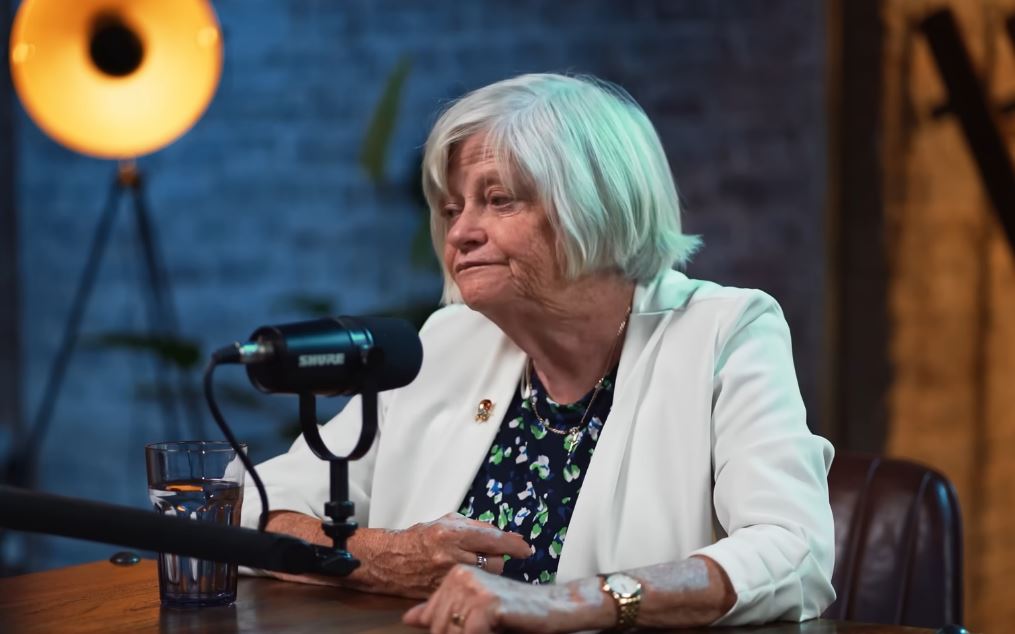
Ann described her father James, officially known as James Murray Widdecombe CB OBE, Head of Naval Supplies and Transport at the Ministry of Defence, as “very formidable; a bit grumpy, but I loved him dearly.” That description has a recognizable quality. The kind of father whose love you could better appreciate in hindsight than at the time. She claimed that although Ann and her brother Malcolm were never smacked, the yelling had an impact of its own. cruelty-free discipline. The opposite of warmth is structure.
Looking back on her life and the unexpected, shocking circumstances of her death in July 2026, it’s remarkable how much of Ann Widdecombe’s character was shaped by that family foundation. the focus on responsibility. the courage to maintain an unpopular stance. the profound seriousness of values that others occasionally found more agreeable. She did not create these things. In some respects, they were a postwar British naval family’s only-daughter inheritance.
On July 9, 2026, she was discovered dead at her Dartmoor home at the age of 78. The situation is still being looked into. A murder investigation was started. The news was devastating for people who were familiar with her work or just remembered her from decades of British public life, including her appearances on Strictly, her years in the Commons, and her insightful parliamentary exchanges. Among others, Grant Shapps posted a picture of Ann holding his baby son, which is a more tender image than most people associate with her. It’s the kind of information that usually comes to light after someone passes away. The side they rarely displayed.
Rita and James’ only child, Ann Widdecombe, never had a daughter of her own. She was the last person in that line. However, she addressed the issues raised by her life in her own unique way by simply living as she did. These issues include what women owe their mothers’ expectations, the costs of public life, and whether a woman without children is somehow incomplete. Without apology. according to her own terms. Right up until the very end.
