

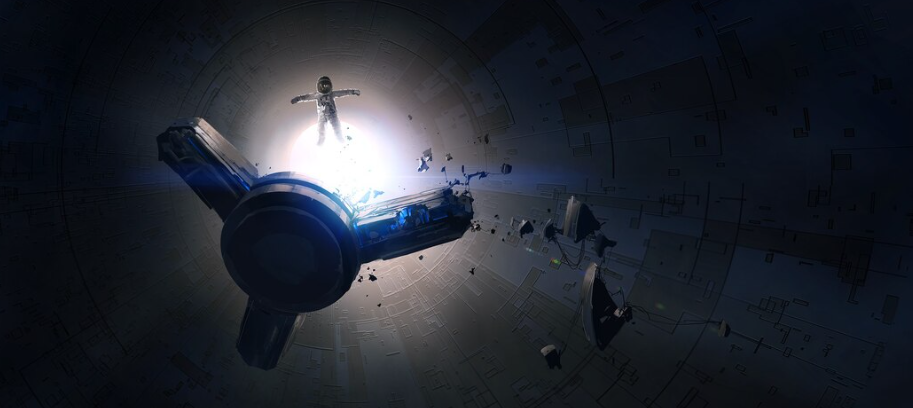
Most coastlines had nothing to see in the early hours of the Pacific, no spectacle, no dramatic streak across crowded skies. Just an unseen object that had been forgotten for a long time by everyone outside the space community and was falling more quickly than it should have. Van Allen Probe A had reached the end of its silent orbit somewhere above the atmosphere, slipping downward in a way that was both familiar and strangely unsettling.
It’s simple to overlook the fact that space hardware moves. NASA launched the probe in 2012 with the goal of researching the radiation belts that encircle Earth. The intended duration of the mission was two years. It extended into seven. Then, after running out of fuel in 2019, it drifted silently, outliving its purpose like many things constructed with accuracy and hope.
| Category | Details |
|---|---|
| Satellite | Van Allen Probe A |
| Organization | NASA |
| Launch Year | 2012 |
| Mission Duration | ~14 years in orbit |
| Weight | ~1,300 pounds (≈600 kg) |
| Mission Purpose | Study Earth’s radiation belts |
| Re-entry Date | March 2026 |
| Re-entry Location | Pacific Ocean (approximate) |
| Risk Level | ~1 in 4,200 chance of harm |
| Reference | https://science.nasa.gov |
The way these things die has a certain stillness to it. Not a single alarm. There was no last broadcast. Just a slow loss of control, with solar panels out of alignment and individual systems shutting down. The probe continued to orbit the planet, but it was no longer truly “working.” In a sense, it was waiting. awaiting the usual actions of gravity and atmospheric drag.
Engineers initially believed that time would arrive in the 2030s. The sun, however, had different plans. The current solar cycle, which is more active than anticipated, slightly increased drag by expanding Earth’s upper atmosphere. The satellite’s timeline may have drastically shortened as a result of this subtle expansion of invisible air acting as a slow hand that drew it closer, orbit by orbit.
These modifications don’t have a significant impact on mission control. They manifest as changing numbers, altered forecasts, and updated models. Nevertheless, there’s a feeling that something a little unexpected is happening. Even with all of our calculations, space still defies complete control.
Furthermore, it becomes more difficult to ignore that uncertainty when a 1,300-pound object starts to fall uncontrollably.
It was always said that there was little danger to those on the ground. One in 4,200, roughly. Almost insignificant in terms of statistics. However, such figures have an odd weight. They acknowledge the possibility without providing consolation. Unaware of the trajectory above them, cities continued to function normally somewhere beneath that descending object, with cars idling at intersections and lights flickering on in early morning kitchens.
During re-entry, the majority of the probe was predicted to burn up and tear apart due to the intense heat and pressure. If any fragments survived, they would probably end up in the ocean. That’s what took place. Over a far-off section of the Pacific, far from populated land, the debris dispersed innocuously. The event went by in silence, almost courteously, leaving little evidence.
However, it is difficult to ignore the larger pattern. Private launches, commercial constellations, and experimental missions are all launching satellites more quickly than before. Eventually, all of them will fall. With objects aging, drifting, and sometimes falling back, the sky is starting to feel less like a blank canvas and more like a congested highway.
This specific satellite has a reflective quality as well. The Van Allen probes were designed to investigate radiation, which is a force we are always in contact with but cannot see. Scientists were able to better understand how solar storms impact power grids, communication systems, and even astronauts thanks to their data. In a sense, the satellite lived its entire life watching for threats that were invisible, but in the end, it turned into a tiny, obvious danger.
Even from a distance, there is a subtle tension as you watch this happen. Not exactly fear. more akin to consciousness. GPS, communication, and weather forecasting are examples of infrastructure that depends on transient objects by design. It’s still unclear if end-of-life management systems will be able to keep up with the speed at which we’re sending them up.
Just prior to re-entry, a satellite undergoes a transition from object to event. It becomes something that occurs rather than something we monitor. It feels like a small but significant change. It serves as a reminder that Earth and space are one and the same. Time, gravity, and physics all continuously connect it.
Ultimately, the 1,300-pound issue was resolved in pieces and fire over open water. No harm. No long-lasting headlines. However, the tale doesn’t end there. Its twin, another probe, is still up there, silently orbiting along a similar course. It will also descend.
