

Last year, Zohran Mamdani made $1,643 from writing music. That number, which is buried in his 2025 taxes, tells us a lot more about the man than it should. It’s a small amount—even by hobbyist standards—but it comes with an interesting story: a 34-year-old Democratic mayor of New York City, who used to go by the online name Young Cardamom, is still quietly collecting checks from songs he recorded years ago about Indian flatbread and colonialism.
A copy of Mamdani’s tax returns was given to reporters this past Thursday. They showed that his real source of income was his $131,296 salary as a member of the New York State Assembly. With the extra $10,010 that his wife made as a graphic designer, their total yearly income was about $145,000. Not out of the ordinary for New York by any means, but not nothing either. As mayor, his official Mamdani salary is now $258,750 a year, which is a big jump from his Assembly pay.
The strange thing that happened right after the New York City Council voted on July 16 to raise the mayor’s salary from $258,750 to $305,800 made headlines almost right away. A rise of $47,050 is the kind of number that most officials just shrug off and move on. It wasn’t Mamdani. After the vote, he stood in front of the press and said, “I will not accept a pay raise.” When asked to explain himself, he said something that was almost pleasantly direct. People I’ve talked to in New York City have told me their main worry is that the mayor makes too little money. That’s also not my business.
That statement is clear in a way that seems deliberate. It’s hard to argue with the way things look, whether it’s because of strong conviction or sharp political instinct—probably a mix of the two. New York is pricey, and housing costs are making it hard for people to get by. It also makes a difference if a mayor publicly turns down a $47,000 raise or quietly accepts it. A behavioral scientist named Dr. Gleb Tsipursky put it simply: turning down a raise builds trust in a leader when it’s clear that their own goals are in line with the sacrifices they ask others to make. He said that the amount of money doesn’t matter as much as whether the action is consistent.
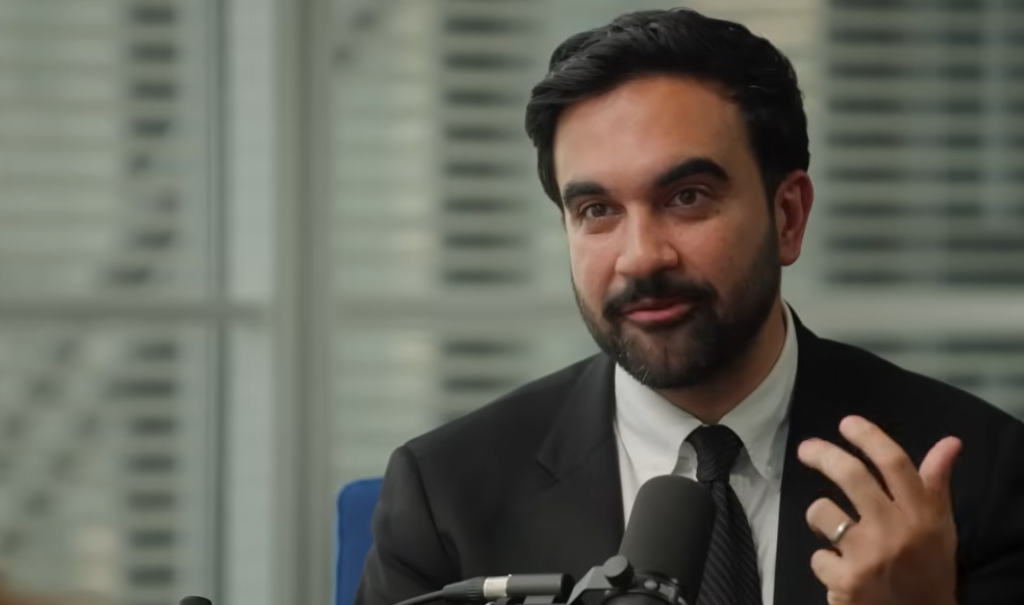
It’s important to note that Mamdani isn’t the first mayor of New York to have a strange financial story behind his pay. Michael Bloomberg‘s tax return from 2012 shows that he made between $2,000 and $10,000 from TV appearances, such as in a Matt Damon movie and a Muppets Christmas special. There have been times when politics and royalties have met. Still, it’s not like any other mayor to joke at a press conference that people in New York should stream his music on Spotify. “A lot of people say they’re listening,” Mamdani joked. “They’re not listening.”
He started rapping in high school and has called himself a “C-list rapper,” which sounds like a real compliment. His early music dealt with social issues like immigration and identity. This is the kind of music that doesn’t usually make it to the top of the charts but holds up better over time than pure pop. It was the indie-rap duo Das Racist that gave him ideas. They made a name for themselves by being politically aware and purposely weird at the same time. It’s simple to see how that affects the politician he’s become.
It doesn’t matter if the salary rejection is a one-time thing or the start of a longer pattern. Signs are important until they aren’t. Experts in behavior say that acts like this quickly lose the goodwill of the public if the behavior doesn’t change in other areas. For now, though, the story of the man who made $1,643 off of old rap songs, turned down a $47,000 raise, and now runs the biggest city in the United States is at least interesting.
