

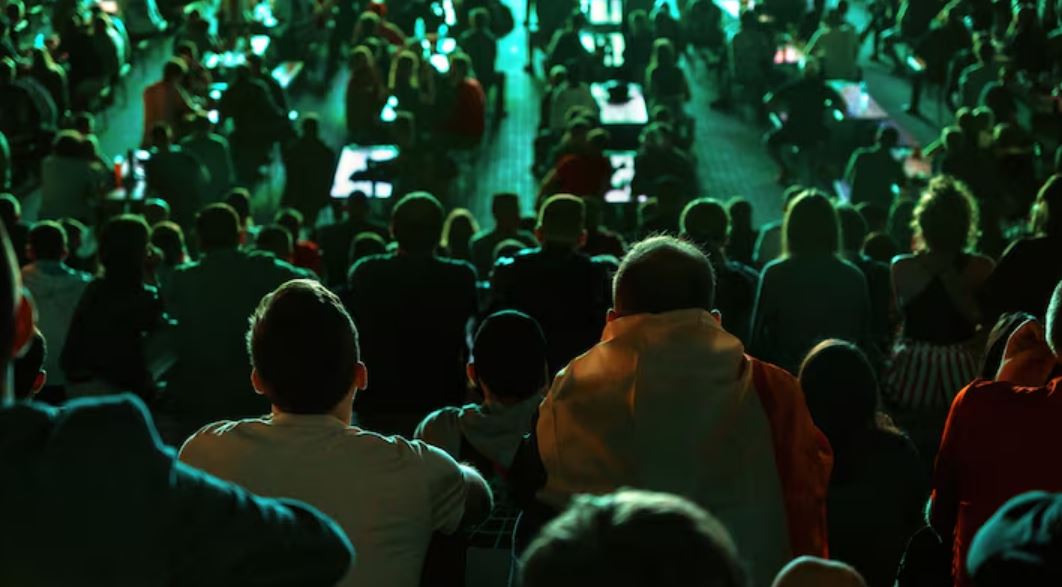
Over the past few years, strange things have been occurring in movie theaters. Movies continue to get longer, moviegoers continue to turn up, and everyone acts as though sitting still for three and a half hours in a chair meant for someone half your size is perfectly normal. Since 2020 alone, the average running time of the highest-grossing movies has increased by about thirty minutes, reaching two hours and twenty-three minutes by 2023. And that’s only the mean. The anomalies—your Killers of the Flower Moon, your Oppenheimers—push past three hours without blinking.
This wasn’t always the case. Or rather, it was, but the way filmmakers approached it was different. In 1962, Lawrence of Arabia ran for more than three and a half hours. Cleopatra almost reached the age of four. However, the intermission, an integrated pressure valve, was included with those screenings. Audiences experienced a natural pause as projectionists had to switch reels. It was time to go to the bathroom, have some ice cream, and think about what they had just seen before jumping back in. The intermission silently perished along with the reel change when digital projection killed it. Gandhi’s 1982 release is widely regarded as the final significant Western production to feature one as standard.
After that, no one seemed to give a damn for roughly forty years. Most movies, give or take, lasted less than two hours. However, the absence has become noticeable due to the recent increase in runtimes. The UK Cinema Association’s CEO, Phil Clapp, has stated that member theaters are currently debating the possibility of reintroducing structured intermissions for any film that is three hours or longer. It’s not a pointless discussion. It’s a matter of logistics.
Last year, Brady Corbet’s The Brutalist sharpened the question. With a purposeful intermission, the movie divided into two parts, and the decision became almost as talked about as the film. According to Corbet, the intermission “eventized” the experience, transforming a screening from passive consumption into something more akin to a cultural excursion. There is a component to that. Attendance at the movies has been declining for years, and part of the reason is that it’s simply easier to watch a movie at home, where you can stop whenever you want and eat whatever you want. An intermission reframes the theater experience as something worth the inconvenience rather than competing with that convenience.
It is more difficult to reject the accessibility argument than some purists would like. A fifteen-minute break is not a luxury for viewers who are older, have medical conditions, or are neurodivergent. It’s the distinction between going to school and staying at home. Cutting people out of three-hour or longer experiences seems counterproductive if the objective is to fill seats.
Of course, not everyone is in agreement. Los Angeles Times theater critic Charles McNulty has made a strong case for continuous viewing, likening it to a dream that is almost impossible to resume at the same emotional intensity once it is interrupted. That is also true. A well-made movie has the power to put you in a state of trance, and waking up to find yourself standing in a hallway with fluorescent lighting doesn’t exactly help. The counterargument is that the intermissions in movies like Lawrence of Arabia and Gone with the Wind didn’t make them any worse. They were created with them in mind, building to organic breaking points in the same manner that a novel closes a chapter.
The fact that Quentin Tarantino decided to add a ten-minute intermission to the four-hour theatrical version of Kill Bill, which will be released later this year, indicates that the discussion is progressing beyond theory. For their part, theater owners aren’t particularly against it because an intermission means another visit to the concession stand, which is where theaters really make money.
It’s difficult to ignore the irony. The longest movies in decades are drawing crowds despite the fact that we live in a time of fifteen-second attention spans and endless scrolling. Perhaps the intermission isn’t even a way to accommodate short attention spans. Perhaps it’s what enables people to genuinely commit to something for an extended period of time without fearing the experience. This is the four-hour epic. The only thing left to decide is whether we’ll endure it all in one harsh stretch or at last acknowledge that taking a break could improve the situation.
