

Every September, someone declares the smartphone’s demise somewhere in Silicon Valley or on a keynote stage in a city that still adheres to its own mythology. The audience gives a nod. The slides appear tidy. In the next quarter, 200 million iPhones were quietly sold. The hype cycle, the prediction, and the humiliation by reality have all practically become rituals. That’s precisely why it’s important to keep an eye out when those who are actually creating the next big thing begin making abnormally high wagers.
According to reports, OpenAI has partnered with Jony Ive, the designer who gave the iPhone its physical identity, to create an AI-first gadget that might not even have a screen. Smart glasses seem to be Google’s next big computing platform. Typically, Apple doesn’t make any public statements, but its acquisition history suggests otherwise. These aren’t small businesses looking for venture capital. These businesses created the smartphone era and are now covertly developing something more. From the outside, it seems like the topic of discussion has changed from “could this happen” to “how long will it take.”
Key information — AI & the post-smartphone era
| Topic | Post-smartphone computing — how AI agents and wearables are reshaping personal technology |
| Current smartphone market | Approximately $520 billion globally in 2024 — nearly double the size of the global PC market |
| AI smartphone growth | IDC forecasts AI smartphone shipments growing 364% year-over-year in 2024, reaching 234.2 million units |
| GenAI phone adoption | Canalys estimates 58% of new smartphones will carry GenAI capabilities by end of 2025 |
| Key challengers | Meta Ray-Ban smart glasses, Humane AI Pin (discontinued), OpenAI x Jony Ive screen-free AI device (in development) |
| Smart glasses market | 678,600 units shipped globally in 2023 — projected to reach 13 million units by 2030 |
| AI wearables market | Global wearable AI market forecast to grow from $21 billion (2022) to over $160 billion by 2030 |
| Notable prediction | In 1992, Intel CEO Andy Grove called “a computing device in every pocket” an unrealistic pipe dream |
| Smartphone constraint timeline | Analysts at Stansberry Research suggest the smartphone’s constraint curve could break between 2026 and 2029 |
| Central uncertainty | Whether AI agents, wearables, and ambient computing will replace smartphones or simply become dependent accessories to them |
Knowing what AI agents actually do to the human-device relationship may provide the clearest signal. These days, using a smartphone entails opening it, tapping an app, typing, scrolling, and waiting. It is a hands-on, active interaction that is presumed to be carried out by a human. When sufficiently trustworthy, AI agents dispel that presumption. They make the restaurant reservation, place the regular grocery order, write and send the message, summarize the meeting, and do all of these tasks on your behalf while you work on something else. It becomes superfluous to browse, swipe, or zoom in on a flight confirmation at a checkout counter. And the form factor that was constructed around it begins to feel out of place when the interaction model drastically alters that.
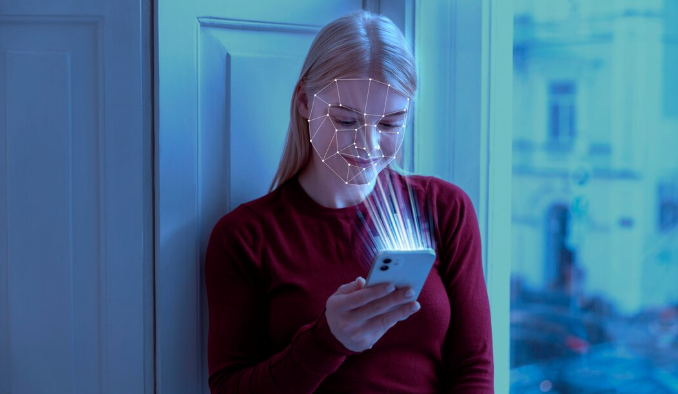
There is a historical trend worth considering. Home phones replaced pay phones. Pagers replaced home phones. Flip phones replaced pagers. The iPhone, which debuted in 2007 and was largely unanticipated by the industry, replaced flip phones. Andy Grove, the CEO of Intel, openly rejected the notion of a computing device in every pocket as a pipe dream in 1992. Not because Grove was stupid, but rather because no one foresaw the convergence of capabilities that would make it a reality, it’s one of the most frequently cited incorrect predictions in tech history. We might be in a similar situation right now, right before something converges in a way that isn’t quite apparent yet.
The wearable AI market was estimated to be worth about $21 billion in 2022 and is expected to grow to over $160 billion by 2030. This is a significant amount, but forecasts at this scale are typically more aspirational than analytical. What is currently available on the market is more grounded: gadgets like the Bee AI bracelet and other wearable ambient computing devices that start to observe, summarize, and anticipate instead of just recording data. A Fitbit that counts your steps is not the same as a wearable that silently records a conversation, arranges what needs to be reviewed, and displays it before you even consider looking. It’s not too late yet. However, the direction is clear.
The counterargument is legitimate and merits careful consideration. The Humane AI Pin, which debuted at $700 and received terrible reviews, taught the industry a crucial lesson: people don’t genuinely want to give up their phones for something worse. The device failed because the execution was far from ready, not because the concept was unfeasible. Over a million Ray-Ban smart glasses were sold by Meta in a single year, which is impressive until you consider that Apple sells about that many iPhones every three days. The ecosystem is deeply ingrained, the infrastructure is vast, and any new gadget must not only function well but also blend in with the digital life that has been gradually constructed around the glass rectangle in every person’s pocket.
Whether AI will destroy smartphones or just make them more powerful than they have ever been is still genuinely unknown. Both are conceivable. Observing how things are actually evolving, a more astute argument might be that the smartphone survives the next five years but alters its relationship to everything around it, becoming the processor instead of the screen and the hub instead of the interface. The glasses communicate with the phone. The wearable communicates with the phone. On the phone, the AI agent operates. You simply stop staring at it for so long.
That may be the most accurate description of what will happen next. The focus is on the end of the screen rather than the end of the device. Even though that might seem like a minor change, think about how much of everyday life is currently conducted behind that glass and what it would mean to regain some of it.
