

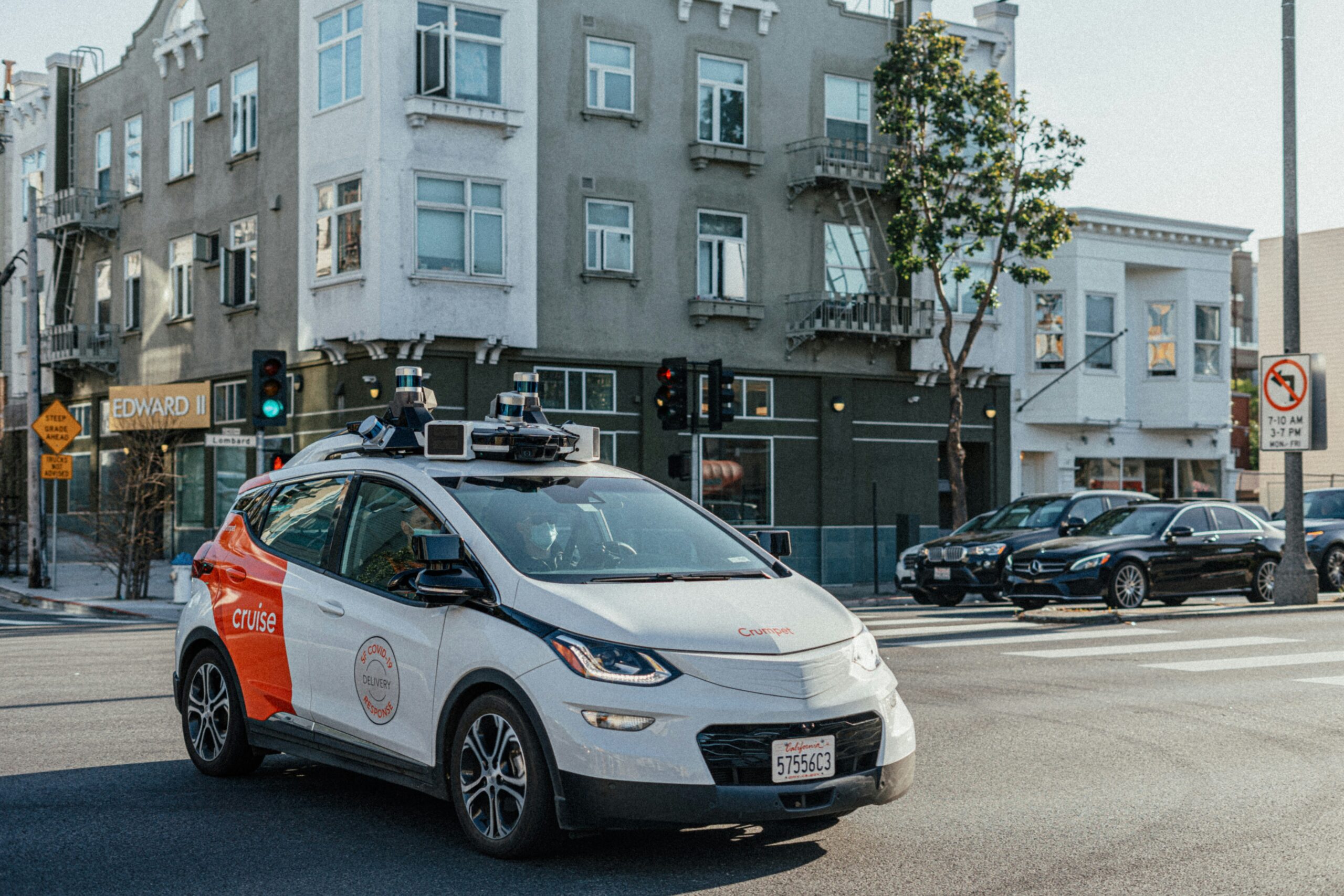
In a rare show of governmental speed, the UK has decided to fast-track its plans for self-driving cars. By spring 2026, commercial autonomous vehicle (AV) pilots originally expected in 2027 will begin operating in public spaces.
These won’t just be test cars doing laps around closed loops. We’re talking real passengers, app-based bookings, and no human drivers behind the wheel.
The move comes on the heels of the Automated Vehicles Act, passed in 2024, which lays the legal groundwork for a driverless future. It’s ambitious, but there’s a reason for the rush: economic potential.
A £42 Billion Opportunity, If It Works
Supporters of autonomous vehicle tech see it as more than just a novelty. According to UK government projections, this industry could add up to £42 billion to the national economy. It’s also expected to create 38,000 new jobs by 2035.
Think coders, hardware engineers, fleet managers, AV service operators, urban mobility analysts- the whole ecosystem.
London is already a hotspot. Companies like Wayve and Oxa are testing AI-based driving systems, and Uber plans to roll out its first UK robotaxi pilot soon. For cities that adopt early, the hope is that AVs will reduce congestion, improve air quality, and lower operating costs in public transportation. It’s not just about cars; it’s about reshaping how cities move.
Here’s your revised section with the London street art study mentioned organically as a real-world concern:
But Let’s Not Pretend the Road Is Clear
Despite the economic promise, there are still serious questions that remain unanswered, starting with safety.
Autonomous systems are only as smart as the data they’re trained on, and that data has blind spots. A study reported by 11 Alive News found that something as simple as graffiti on road signs can fool self-driving cars.
In Atlanta, USA, where autonomous vehicle testing is underway, city crews have been called out over 200 times to remove graffiti from traffic signs. Still, it remains a common issue and a serious one.
If a self-driving car runs a stop sign because it couldn’t read it, who’s responsible? The manufacturer? The software team? The passenger? The legal aftermath can be murky, TorHoerman Law notes.
That’s why experts advise calling an experienced car accident lawyer in Atlanta if you’re involved in a crash with an autonomous vehicle. The laws may be catching up, but your rights still need protection.
The same concerns apply to UK cities as well. London, now officially crowned the best city in the world for street art, brings another layer of complexity. While that title celebrates creativity, it also highlights a risk. For self-driving cars, visually noisy environments can blur the line between murals and traffic signs. And that’s not just a design flaw. That’s a safety hazard.
Can the UK’s Roads Keep Up?
Here’s a harder question: even if the tech works, are the roads ready?
The UK’s aging road infrastructure already struggles with potholes, unclear lane markings, and inconsistent signage- features that confuse even human drivers. For AVs, which rely on high-definition mapping and real-time data, those flaws become deal-breakers. The promise of autonomy only holds if the environment is designed to support it.
Local authorities will need to invest heavily in V2X (vehicle-to-everything) tech, upgraded traffic signals, consistent signage, and new maintenance standards. That’s on top of regulation, insurance reform, and emergency response protocols. All of which need to evolve to accommodate vehicles with no steering wheels or drivers.
Job Creation And Job Displacement
While AVs could generate thousands of new jobs from AI engineers to fleet managers, they also threaten to disrupt entire industries. Long-haul truckers, taxi drivers, and delivery personnel could find themselves gradually replaced by machines that don’t need breaks, salaries, or sleep. That kind of shift doesn’t just happen quietly. It hits livelihoods, families, and communities.
If the UK wants to embrace automation without widening inequality, it needs more than innovation; it needs infrastructure for people. That means retraining programs, transition plans, and strong social safety nets.
Otherwise, the benefits of automation will remain concentrated in tech hubs, leaving others behind. It’s not just about building the future. It’s about making sure real people aren’t bulldozed in the process.
Public Trust: The Real Barrier to Entry
No matter how advanced the technology, self-driving cars won’t go far without public trust. However, right now, that trust is in short supply. According to a Deloitte report, UK drivers are among the most skeptical in the world when it comes to AI in cars. Many still feel uneasy about handing over control to a machine. A misread sign or confusing road marking could easily lead to disaster.
A single high-profile crash could undo years of progress. That’s why transparency is essential. The government must require clear accident reporting, independent audits of AV systems, and real accountability for failures. People need to know these systems work, but more importantly, that when they don’t, someone is held responsible.
FAQs
Will self-driving cars replace public transport in the UK?
Not likely. Most autonomous vehicle programs are designed to complement, not replace, existing public transport systems. These services could help fill gaps in underserved areas, offer last-mile connectivity, or ease congestion. However, buses, trains, and subways will still play a central role.
Are there regulations in place to ensure AV safety?
Yes. The UK has introduced specific legal frameworks under the Automated Vehicles Act. It includes safety approval processes, data transparency requirements, and clear rules around accident reporting. However, enforcement protocols and independent oversight mechanisms are still evolving alongside the technology itself.
Could road infrastructure really slow down AV rollout?
Absolutely. Autonomous vehicles rely on high-quality road markings, clear signage, and updated maps. Inconsistent infrastructure, like faded lines or vandalized signs, can confuse AV systems and increase risk. Upgrading physical infrastructure is as crucial as refining the software that powers these vehicles.
Where Do We Go From Here?
The UK is betting big on self-driving cars, and it’s easy to see why. A successful rollout could mean economic resurgence, smarter cities, fewer accidents, and greener streets.
But let’s be clear: fast-tracking AVs isn’t just a tech challenge. It’s a policy challenge, a design challenge, and a human one. What we build next won’t just shape the economy; it will decide who feels safe walking across the street.
If we want to get this right, we need to move fast but not faster than we can think.

7 Comments
I don’t think the title of your article matches the content lol. Just kidding, mainly because I had some doubts after reading the article.
Thank you for your sharing. I am worried that I lack creative ideas. It is your article that makes me full of hope. Thank you. But, I have a question, can you help me? https://accounts.binance.com/pl/register-person?ref=UM6SMJM3
466891 343499extremely good post, i certainly enjoy this wonderful internet site, persist with it 605479
766289 340893You developed some decent points there. I looked online for the issue and found many people might go as nicely as utilizing your internet website. 813553
Your point of view caught my eye and was very interesting. Thanks. I have a question for you.
487173 794534Excellent post, thank you so significantly for sharing. Do you happen to have an RSS feed I can subscribe to? 32804
I don’t think the title of your article matches the content lol. Just kidding, mainly because I had some doubts after reading the article.