

There’s a detail about Kylian Mbappé that tends to get lost in the noise of transfer fees and sponsorship announcements. He grew up in Bondy, a working-class suburb in the northeastern edge of Paris — not exactly the setting you’d associate with someone who, by 27, has accumulated an estimated net worth of $250 million. But football has a way of rewriting geography, and Mbappé has rewritten just about everything else along the way.
By 2026, Mbappé’s financial profile has settled into something genuinely rare for someone his age. His estimated gross fixed salary at Real Madrid sits at around €31.25 million per season — roughly €600,000 per week before bonuses. That figure alone places him among the highest-paid club players on earth. Combined with his commercial portfolio and investment activity, Forbes estimates his total earnings over the past twelve months at $95 million, making him the third-highest-paid player at the 2026 World Cup, behind only Cristiano Ronaldo and Lionel Messi. That’s reasonable company to keep.
The Madrid move, formalized in June 2024 on a free transfer after years of speculation, turned out to be everything Mbappé needed it to be financially. Real Madrid is not just a football club; it’s a commercial engine, and attaching yourself to that machine — especially as their number 10 — multiplies your visibility in ways that are difficult to quantify. His debut season produced 31 La Liga goals and the European Golden Shoe. The second season added the Champions League top scorer award with 15 goals. At this point, the on-field résumé is writing its own endorsement pitch.
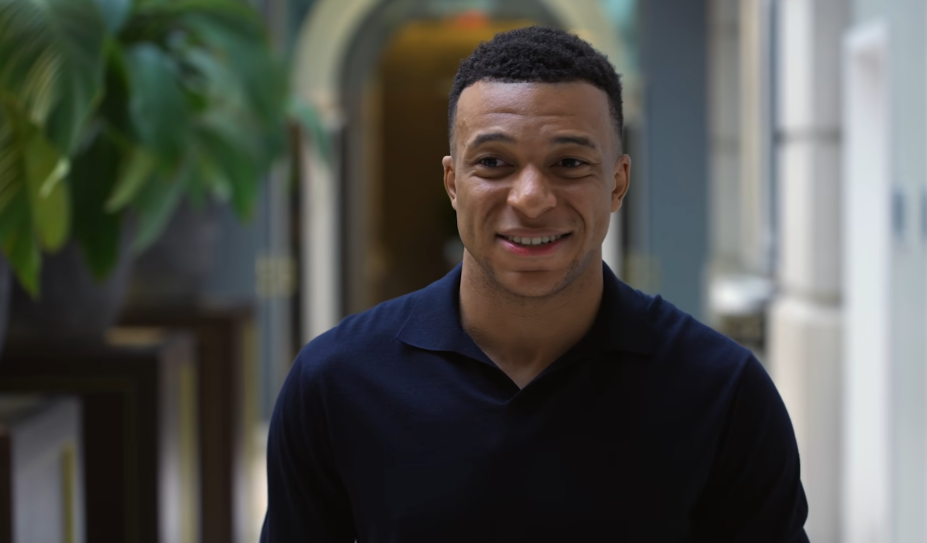
Speaking of endorsements, Mbappé’s off-field earnings are estimated at $25 million annually. Nike remains the cornerstone of his commercial life — a relationship that dates to his Monaco days and has only deepened since. He’s appeared on three consecutive FIFA video game covers, carries a partnership with Dior, wears Hublot watches in campaigns, and recently added Fairmont Hotels and health insurer Alan to a portfolio that reads less like a footballer’s deal sheet and more like a brand consultant’s client roster. The Alan partnership is particularly interesting — he didn’t just sign as an ambassador, he invested. That tells you something about how he’s thinking long-term.
It’s worth noting what he did with his 2018 World Cup prize money. He donated every cent to a French charity supporting people with disabilities, saying at the time that he earned enough and that helping others didn’t cost him much but changed their lives. That moment stuck. It didn’t become a marketing strategy — it just happened, and people remembered it. That kind of reputation, built quietly over years, tends to attract certain types of brand partners.
On the business side, Mbappé’s investment firm, Interconnected Ventures, acquired an 80% stake in French club Caen in July 2024 for roughly €15 million. It’s a modest entry into football ownership, but the direction is clear. Many athletes end their careers having earned enormous sums without the infrastructure to protect them. Mbappé seems aware of that particular trap.
At the 2026 World Cup, he’s been in the form of his life — already past 20 career World Cup goals, setting records that once belonged to Klose and Ronaldo. Whether France goes all the way or not, his marketability entering the second half of his career appears to be heading in only one direction. Ronaldo is a billionaire at 41. Messi crossed that threshold recently. Mbappé is 27. The math is doing something that’s hard to ignore.
It’s still unclear exactly how far the fortune grows from here, and estimating net worth for footballers at this level always involves some educated guesswork. But $250 million, at this stage of his life and career, feels less like an endpoint and more like a reference point for whatever comes next.
