

When you walk into any gym at six in the morning, you can usually see them: the people who are working harder than anyone else but seem to be getting nowhere while running on treadmills with that distinct grey fatigue around their eyes. The bread has been cut. The protein powder has been purchased. The scale is a stubborn creature that won’t cooperate. Between sips of cold coffee, almost none of them are discussing how little they slept the previous night.
As if the human body were a neat spreadsheet, the two pillars of weight-loss discussion for decades were calories in and calories out. Sleep was viewed as the soft variable that you would arrive at after organizing your macros. That framing is beginning to look dated. For years, researchers have been working on it, and the picture that has emerged is more biological and messy than the previous recommendations. Clinicians who deal with this on a daily basis feel that the sequence of operations is incorrect.
| Topic Information | Details |
|---|---|
| Subject | The biological link between sleep deprivation and weight gain |
| Recommended Sleep Duration | Seven to nine hours per night for most adults |
| Key Hormones Involved | Leptin (satiety) and ghrelin (hunger) |
| Higher Risk Threshold | Consistently sleeping six hours or fewer |
| Associated Health Concerns | Obesity, Type 2 diabetes, cardiovascular issues |
| Research Source | Study by E. Papatriantafyllou, 2022, cited 170+ times |
| Common Cravings After Poor Sleep | High-fat, high-sugar, energy-dense foods |
| Brain Region Affected | Frontal lobe, which governs decision-making and self-control |
| Related Conditions | Obstructive sleep apnea, insomnia, depression, anxiety |
| Reversibility | Largely reversible with consistent sleep hygiene |
The mechanism is no longer enigmatic. The majority of the talking is done by two hormones. Ghrelin instructs the brain to find a snack, while leptin signals that you’ve had enough. Leptin decreases and ghrelin increases when sleep is short, and by three in the afternoon, someone who had a perfectly healthy lunch is searching the pantry. It seems to be a willpower issue. Really, it isn’t. Rearranging the furniture without permission is chemistry.
The type of food that a weary brain desires complicates the situation. Not a salad. not fish that has been grilled. Research indicates that after a bad night, the brain’s reward circuitry lights up differently, making the doughnut on the office counter genuinely harder to resist. People who are sleep deprived tend to reach for sugar and fat with an almost predictable consistency. The idea that the tired brain is looking for quick fuel is one that is still under investigation. Another is that the frontal lobe, which is typically responsible for the small heroic act of refusing, isn’t operating at full capacity.
Then there is the activity side, which is much more important but receives less attention. A person who only gets five hours of sleep doesn’t skip workouts because they’re lazy. They avoid it because, understandably, their body is attempting to preserve what little energy it still has. The unconscious fidgeting, pacing, and stair climbing that silently burns calories throughout the day also decreases in non-exercise movement. Take the elevator, drive rather than walk, and spend a little more time on the couch. It doesn’t feel like a choice. In any case, it builds up.
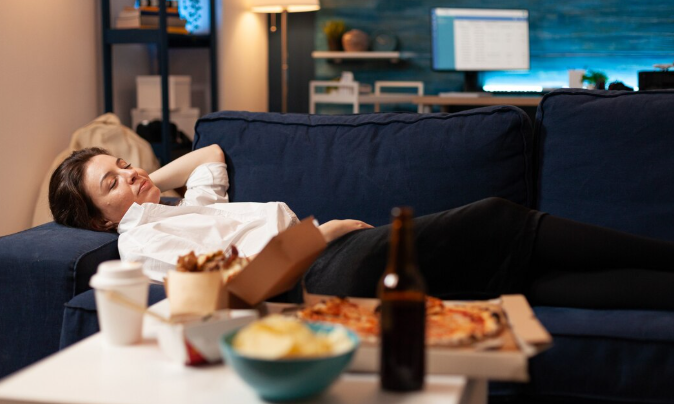
The cruel twist is that sleep is often ruined by being overweight. Anxiety, joint pain, reflux, sleep apnea, and other issues all compound and make it more difficult to rest, which worsens hormones and increases cravings. It’s difficult to ignore how this trap gradually, frequently undetectably, closes around people until they start to question why something that worked when they were twenty-five doesn’t work when they are forty.
The fix is remarkably unglamorous. No apps, no cold plunges, no supplements. putting down the phone before midnight, keeping the room cool and dark, and going to bed at the same time every night. The majority of diet books still disregard this dull advice, despite the fact that it is backed by a ton of research. Another question is whether the culture as a whole catches up. For the time being, those who just slept tend to be the ones who are subtly successful at controlling their weight.
