

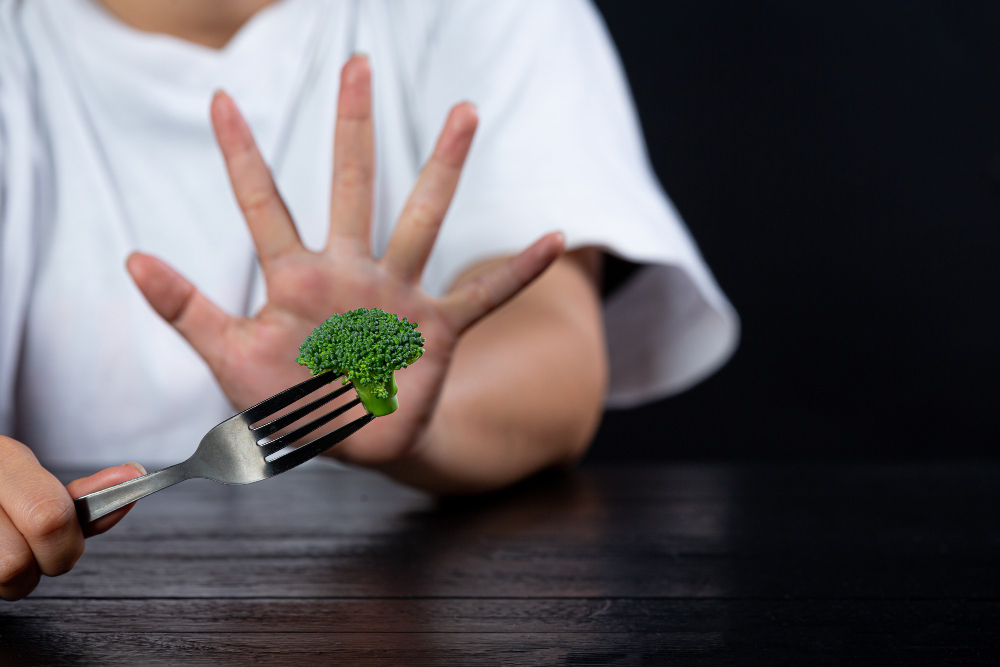
When you finish a meal and still want more, you get a certain kind of frustration. It’s not because the food was subpar or the portions were tiny, but rather because a deeper, nearly undetectable chemical hasn’t yet shut off. Most people attribute this to a lack of self-control and poor self-discipline. The biology provides a more intriguing and far more forgiving narrative.
An empty stomach is not the only sign of hunger. The gut, bloodstream, and brain engage in a constant hormonal dialogue that is controlled by signals that most of us are unaware of but that influence almost all of our eating choices. The hormone ghrelin, which is mostly produced in the stomach and rises in the hours before a meal and falls after eating, is the main voice in that dialogue. It travels straight to the arcuate nucleus of the hypothalamus, the brain’s appetite control center, and basically tells it that fuel is needed. Researchers sometimes refer to it as the hunger hormone, which is accurate but also understates what it actually does. In healthy conditions, the signal is accurate, timed, and highly dependable.
| Component | Type / Origin | Primary Function | Key Detail |
|---|---|---|---|
| Ghrelin | Hunger hormone / stomach | Stimulates appetite; activates arcuate nucleus in hypothalamus | Rises before meals; falls rapidly after eating |
| Leptin | Satiety hormone / adipose (fat) tissue | Signals long-term energy availability to the brain | In obesity, brain may become resistant to leptin’s signal |
| GLP-1 | Satiety hormone / small intestine (L-cells) | Reduces hunger; delays gastric emptying; regulates blood sugar | Basis of GLP-1 receptor agonist drugs (e.g. Ozempic/semaglutide) |
| PYY | Satiety hormone / small intestine & colon | Inhibits hunger-promoting neurons; promotes fullness | Released in proportion to caloric content of a meal |
| CCK (Cholecystokinin) | Satiety hormone / small intestine | Signals meal termination; stimulated by fat and protein | One of the earliest discovered gut satiety signals |
| Hypothalamus (Arcuate Nucleus) | Brain region / central nervous system | Central control hub for hunger and energy balance | Integrates hormonal signals from gut, fat tissue, and brainstem |
| Vagus Nerve | Neural pathway / gut-brain axis | Relays stomach fullness signals to the brainstem | Physical stomach stretching is transmitted via this nerve |
| Leptin Resistance | Dysfunction / obesity-related | Brain stops responding to leptin’s “full” signal | Linked to chronic overconsumption and obesity development |
| Hedonic Eating | Behavioral / reward system | Eating for pleasure, overriding biological hunger signals | Triggered by ultra-processed, high-fat, high-sugar foods |
| Dietary Fiber (Viscous) | Nutrient / plant-based foods | Slows digestion; prolongs satiety; feeds gut microbiome | Fermentation produces SCFAs that may influence GLP-1 and PYY |
| Reference: NIH PMC — “Hunger and Satiety Mechanisms and Their Potential Exploitation in the Regulation of Food Intake” (Amin & Mercer, 2016) | |||
When food arrives and nutrients are absorbed, the small intestine releases a group of satiety hormones, including GLP-1, PYY, and CCK, in response to ghrelin. These are the cues that should end a meal. In recent years, GLP-1 in particular has gained significant relevance outside of physiology labs; medications such as semaglutide, marketed under the names Ozempic and Wegovy, are intended to amplify this biological mechanism. The fact that GLP-1 receptor agonists have had such a profound effect on millions of people speaks volumes about the importance of this pathway. It’s possible that the obesity epidemic is partly caused by a system that, for many people, has stopped sending out clear signals rather than just dietary choices.
All of this is integrated at the hypothalamus. It receives dozens of signals, including information from the gut, fat tissue through the hormone leptin, and the brainstem, which detects physical signals sent through the vagus nerve when the stomach physically stretches. There are layers in the cascade. The anticipatory phase begins first; before anything is consumed, early hormonal activity is triggered by the sight and smell of food. The stomach then starts to physically swell. The intestinal phase then begins, releasing peptides proportionate to the amount of calories and nutrients ingested. A person’s body has been sending those signals for a few minutes before they truly feel full. In other words, the feeling of fullness follows the biology.
This lag is very important. The satiety cascade can catch up with intake if you eat slowly. A person can eat far more than their body requires before the “stop” signal hits with any real force if they eat quickly, as many aspects of modern life encourage. It’s difficult to ignore the extent to which modern food culture directly contradicts this. Fast food is meant to be consumed quickly. Pausing between bites is not encouraged by takeout containers. The biology is typically slower, and there is often conflict between it and the environment.
The two nutrients that have the greatest and most reliable effects on satiety are protein and dietary fiber. Compared to equivalent calorie meals centered around fat or refined carbohydrates, high-protein meals result in higher, longer-lasting levels of GLP-1 and PYY. Fiber, particularly the viscous soluble variety present in oats, legumes, and some vegetables, physically slows the emptying of the stomach, prolonging the intestinal phase’s activity and delaying hunger. In essence, refined carbohydrates have the opposite effect: they quickly digest, raise blood sugar levels, and cause the hormonal system to cycle through hunger once more in a brief amount of time.
Then there is the issue of leptin resistance, which is arguably the system’s most significant and least discussed dysfunction. Long-term appetite suppression is thought to result from the production of leptin by fat cells, which tells the brain that energy reserves are sufficient. Leptin levels are actually higher in obesity, but the brain isn’t paying attention. There is a signal. The receptor has grown numb to it for reasons that are still being investigated. This creates a biological feedback loop that has nothing to do with motivation or character because the people who most need their satiety system to function are also frequently the ones for whom it functions the least consistently.
All of this is overlaid by what scientists refer to as hedonic eating, in which the brain’s reward system completely overrides the hypothalamic signals. At midnight, the hand is drawn to the bag of chips by the expectation of pleasure rather than the need for fuel. In order to take advantage of this pathway, ultra-processed foods are designed to hit the reward system so hard that homeostatic signals—the actual biological need for energy—become nearly insignificant. The food industry has been researching how to accomplish this effect for decades. In a way, scientists who study hunger and satiety are reverse-engineering the same field.
Naturally, behavior does not always change when one understands the science. However, the frame is altered. Hunger is not a flaw in a person. It is a biological system, one that is manipulable and based on actual mechanisms rather than myths about willpower.
