

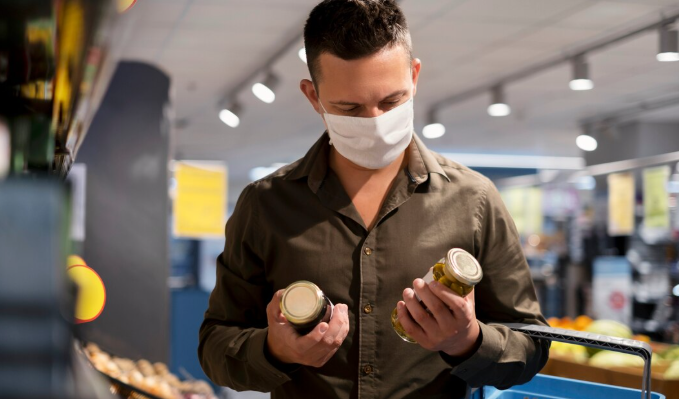
You can see something that the quarterly reports only hint at when you stroll down the cereal aisle of any Target store in the Midwest right now. The shelves are stocked. Cheerios, Nature Valley bars, and Progresso soups are arranged in neat rows. The shopper reaching for them is what’s missing, but not by much. A new advertising campaign won’t solve General Mills’ problem.
On March 20, UBS reduced its price target to $35 from $40 and maintained its sell rating on General Mills, sending a clear message to those who were still optimistic about a quick recovery. Due to organic sales misses, gross margin underperformance, and operating profit disappointments in the most recent quarter, the bank’s analysts predicted that the slowdown could continue well into fiscal 2027. UBS challenged the company’s management’s prediction that fiscal Q4 would demonstrate organic sales growth, claiming it more likely reflects shipment timing than any real increase in customer demand. It’s a courteous way of saying, “Don’t get excited.”
| Field | Details |
|---|---|
| Company | General Mills Inc. |
| Ticker / Exchange | GIS — New York Stock Exchange |
| Founded | 1866 (as Cadwallader Washburn’s flour mill, Minneapolis, MN) |
| Headquarters | Golden Valley, Minnesota, USA |
| Key Brands | Cheerios, Yoplait, Progresso, Pillsbury, Betty Crocker, Nature Valley, Blue Buffalo |
| FY2026 Sales Outlook | Lowered — shares fell 7% on Feb 17, 2026, the steepest single-day drop since May 2022 |
| UBS Rating | Sell (maintained March 2026) |
| UBS Price Target | Revised down to $35 from $40 (March 20, 2026) |
| Core Challenge | Volume declines not recovering despite price increases; weak consumer demand across snacks and refrigerated goods |
| Broader Context | U.S. GDP grew at just 1.2% annualized in H1 2025; nonfarm payrolls added only 73,000 jobs in July 2025 |
Observing General Mills over the last two years gives the impression that the company’s executives sincerely thought pricing power would get them through. And it did for a while. During the 2021–2023 inflation spike, they, like the majority of major food producers, increased prices, transferring costs to customers who reluctantly continued to purchase. Cheerios is Cheerios. Pillsbury is Pillsbury. Your mother purchased it, so you buy it. However, there is a limit to that loyalty, and it seems the business has discovered it.
Volume is the deeper problem. Although revenue was temporarily supported by price increases, unit sales never fully recovered. Customers made adjustments, such as switching to store brands, avoiding the snack section, or just making smaller purchases. An unsettling wild card has entered the picture thanks to anti-obesity drugs. It is difficult to model, let alone plan around, the consequences for processed food companies like General Mills if a significant portion of the population actually starts eating less. Although the extent of that impact is still unknown, investors are uneasy just thinking about it.
The macroeconomic environment is not conducive. According to UBS’s August 2025 broader U.S. economic analysis, the country’s economy is headed toward “stall speed” with real GDP growing at a mere 1.2% annualized rate in the first half of 2025 and monthly job creation slowing to a trickle. Consumer confidence at the grocery store is often correlated with people’s feelings about their paychecks, and many people are currently experiencing uncertainty. Carts reflect this caution: more meals prepared from scratch, more value-sized generics, and fewer high-end items.
Although it’s not the only company experiencing this pressure, General Mills is arguably the most obvious victim. The company’s portfolio, which was developed over many years through acquisitions, is disproportionately concentrated in categories that are especially vulnerable, such as yogurt, snacks, and refrigerated baked goods. These are not necessities. These are the things you purchase when your financial situation is good. You skip them when you’re not. The Blue Buffalo pet food division has been a rare bright spot, which speaks to the state of the rest of the company in a way that is both encouraging and a little ridiculous.
As this develops, one can’t help but think of what happened to businesses like Kraft Heinz and Campbell Soup a few years ago—that difficult, protracted reckoning when investors finally realized that brand relevance wasn’t the same as brand heritage. Shares of General Mills have fallen significantly from their peak, and a 7% one-day decline in February—the worst since May 2022—indicated that Wall Street is growing impatient. UBS continues to believe that the stock appears pricey in comparison to its peers at the current price, indicating that the negative news is not already factored in.
What might make things better? Either a significant change in consumer confidence or a product-line makeover that actually draws in new customers would be necessary for volume recovery. General Mills has done this in the past; it added organic lines, changed its focus to gluten-free Cheerios, and repeatedly redesigned Yoplait. However, renovations take time, and the market is running out of patience. It’s possible that the UBS assessment turns out to be overly negative and that management’s optimism for Q4 is justified. However, the evidence currently supports the bank’s position more comfortably.
In general, the processed food industry is at a turning point. Investor confidence will eventually be restored by businesses that figure out how to restore volume rather than just protect margin. Those who are unable to do so might end up in a multi-year slump that cannot be fixed by adjusting prices. Box by box, aisle by aisle, General Mills feels as though that reckoning has already begun.
