

These days, you can find a conversation taking place in the hallways of any financial ministry in Beijing, Moscow, or Brasília that would have seemed out of the ordinary ten years ago. Officials discuss shifting away from the dollar and settling trades in rubles, yuan, and reals with an unusually confident tone. Wishful language has given way to operational language. Even so, it’s difficult to avoid the impression that reality and ambition continue to reside on different floors of the same structure when looking at the actual data.
China and Russia have accomplished something truly noteworthy. According to Russian Finance Minister Anton Siluanov, 99.1% of bilateral trade between the two nations was settled in rubles and yuan by 2025. That’s not a rounding error; rather, it’s a structural change brought about in large part by Western sanctions that essentially compelled Moscow to act. Finding a different window is not ideology when the dollar-based financial system closes its doors on you. It’s survival.
| Topic Overview: De-Dollarization & BRICS | Details |
|---|---|
| Full Name / Concept | De-Dollarization Movement within BRICS Nations |
| Member States (Founding) | Brazil, Russia, India, China, South Africa |
| Expanded Members (2023 Invitees) | Argentina, Egypt, Ethiopia, Iran, Saudi Arabia, UAE |
| First BRIC Summit | Yekaterinburg, Russia — 2009 |
| Key 2025 Summit | Rio de Janeiro, Brazil — July 6–7, 2025 |
| Dollar Share in Global Forex | ~90% of all global foreign exchange transactions (2022 data) |
| Russia-China Trade in Local Currencies | 99.1% settled in rubles and yuan (2025) |
| Brazil-China Agreement | Local currency trade deal signed 2023; bilateral trade exceeds $100 billion annually |
| BRICS Common Currency Status | No formal proposal; explicitly rejected by Putin (November 2024) |
| Key Institutions | New Development Bank (NDB), proposed BRICS Pay system |
| Primary Dollar Rivals Discussed | Chinese Renminbi (Yuan), Russian Ruble, Brazilian Real |
| Reference & Further Reading | Lowy Institute Analysis (Nov 2025) |
In 2023, Brazil and China reached a similar agreement to eliminate the dollar as a middleman in their bilateral trade. With over $100 billion in annual trade, China is Brazil’s biggest trading partner, so it was difficult to overlook the deal’s symbolic significance. Perhaps President Lula truly believes what he has said about the dollar system being an antiquated instrument of American dominance. However, there is a difference between the ledger and the speech. Over 80% of Brazil’s foreign reserves are still in US dollars. It appears that the rhetoric precedes the restructuring.
The political desire to challenge American financial dominance and the practical reality that the dollar continues to be the most liquid, reliable, and widely accepted currency in cross-border trade give the impression that BRICS as a group is torn between two very different impulses. Approximately 90% of all international foreign exchange transactions in 2022 involved the dollar. The dollar frequently subtly facilitates the exchange underneath, even when emerging markets invoice trade in local currencies. It’s not just the exterior; it’s ingrained in the plumbing.
In November 2024, two days after Trump’s election, a Kremlin discussion session may have been the most illuminating event rather than a summit. Putin stated bluntly, “We have not sought to abandon the dollar and we are not seeking to do so.” Putin has long been seen as the most assertive voice advocating for a post-dollar world. He went on to say that it was too early and, to be honest, not even a goal to create a single BRICS currency. Putin may have been manipulating Trump’s response by using softer language to lessen the pressure of sanctions, but regardless of the motivation, the statement was a reality check that no press release could retract.
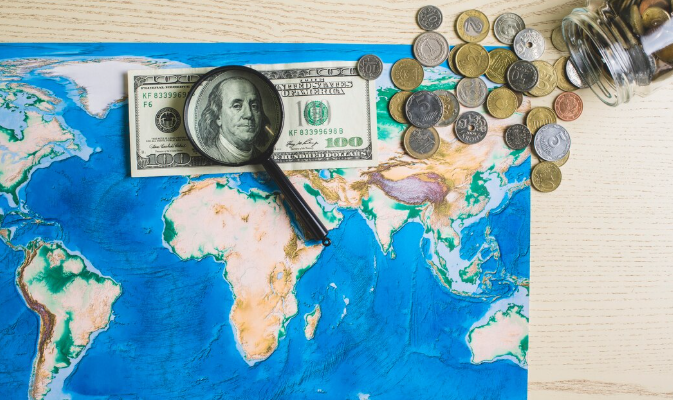
A similar narrative was presented at the Rio de Janeiro summit in July 2025. The term “de-dollarization” did not appear once in the 126-point leaders’ declaration. There was a vague mention of encouraging trade in local currencies. There was no proposal for a single currency. There was no agreed-upon specific mechanism. From a distance, it appears that BRICS summits are becoming more adept at creating ambitious environments and cautious documents.
However, ignoring what’s subtly changing would be a mistake. Iran is looking for ways to get around sanctions by using cryptocurrencies. Egypt has taken steps to lessen its reliance on dollars in bilateral settlements, and China has given its approval. Even in the absence of headlines, the infrastructure for alternative payments is being developed gradually, from the BRICS Pay concept to expanded yuan swap lines. Whether any of this reaches critical mass or if it continues to be a patchwork of workarounds rather than a true monetary system is still up for debate.
This decade and most likely the next will see no decline in the value of the dollar. However, at the Yekaterinburg summit in 2009, when leaders could hardly agree on ambiguous language about a “more diversified international monetary system,” that alone would have been unimaginable. Global financial progress often proceeds more slowly than the announcements made in speeches.
