

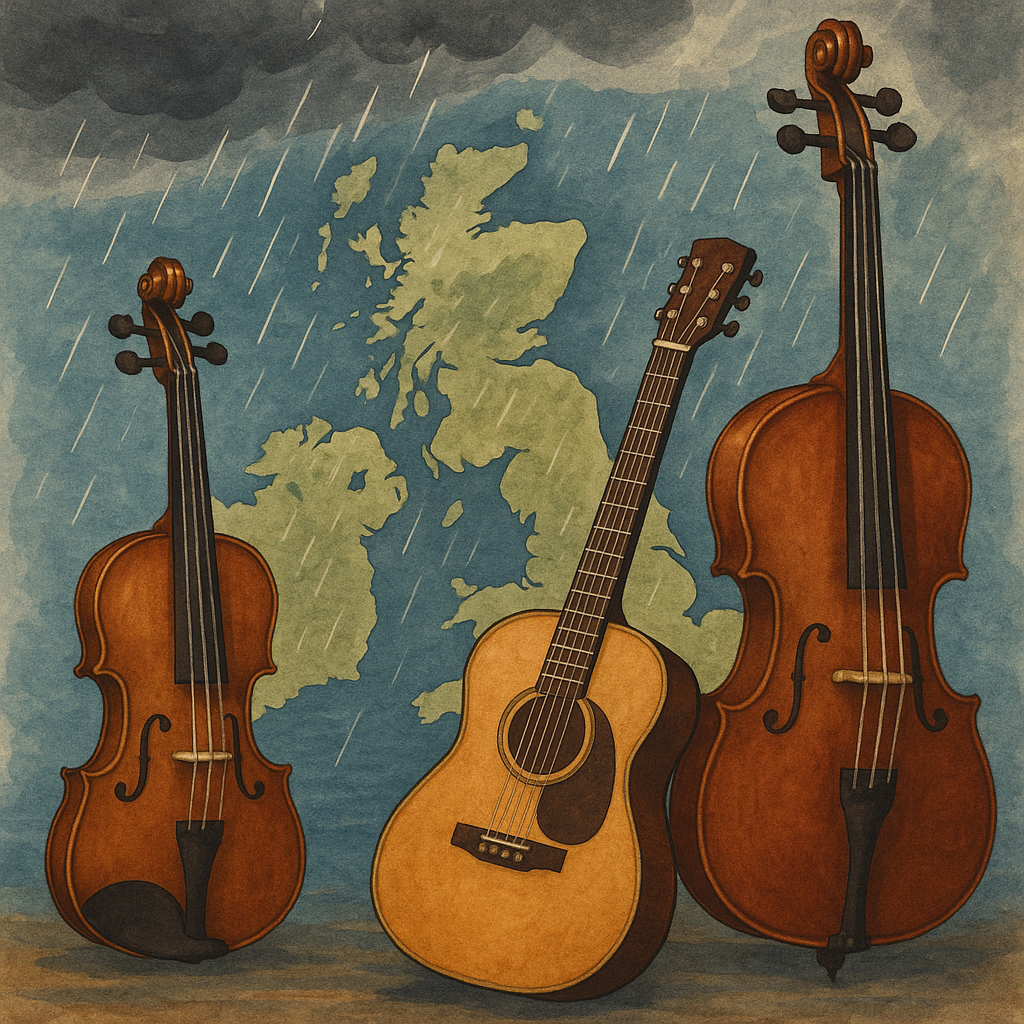
Understanding the impact of the United Kingdom’s unique climate and humidity levels on string instruments is essential for musicians who want to preserve the longevity and sound quality of their cherished instruments. This article explores the effects of environmental factors on string instruments, especially violins, cellos, and guitars, and offers insight into practical care strategies.
The UK Climate: An Overview
The United Kingdom is characterized by a temperate maritime climate, shaped largely by its proximity to the Atlantic Ocean. This results in relatively mild temperatures throughout the year, frequent rainfall, and rapid weather changes—sometimes within a single day. One of the most defining environmental factors for musicians is consistently high humidity, particularly during autumn and winter months, when relative humidity levels often exceed 80%.
Unlike regions with stable continental climates, the UK experiences ongoing fluctuations in moisture and temperature. These conditions may seem subtle on a daily basis, but over time they place continuous stress on wooden musical instruments. Understanding these environmental characteristics is essential for appreciating how string instruments behave, age, and require maintenance in the UK.
How Humidity Influences String Instruments
Wood is a hygroscopic material, meaning it naturally absorbs and releases moisture from the surrounding air. In environments with fluctuating humidity, such as the UK, this constant exchange causes the wood components of string instruments to expand and contract.
During periods of high humidity, wood tends to swell. This may lead to raised seams, tight or swollen fingerboards, sluggish pegs, and changes in neck angle. These issues not only affect playability but can also introduce long-term structural stress. Conversely, during drier periods—often caused by indoor heating in winter—wood may lose moisture and shrink. This significantly increases the risk of cracks, open seams, warping, and loosening of internal components.
Even minor dimensional changes can influence string tension, responsiveness, and tonal balance, making humidity control a critical aspect of instrument care.
Temperature and Its Effects on Sound Quality
Although temperature variations in the UK are generally moderate compared to more extreme climates, they still play a meaningful role in the behavior of string instruments. Temperature changes affect not only the wooden body but also the strings, varnish, and glue joints.
Cold temperatures reduce string elasticity, often resulting in tuning instability and a harsher response. Warmer conditions, on the other hand, may soften strings and varnish layers, leading to buzzing, loss of clarity, or a duller tone. Repeated cycles of warming and cooling accelerate wear on adhesives, particularly traditional hide glue, which is sensitive to both heat and moisture.
When combined with high humidity, temperature fluctuations can compound existing vulnerabilities and gradually degrade an instrument’s structural integrity.
Seasonal Challenges for Musicians in the UK
Each season in the UK presents its own set of challenges for string instruments. Autumn and winter bring high humidity outdoors and dry, heated air indoors—creating abrupt environmental transitions when instruments are moved between spaces. Spring often introduces rapid humidity swings, while summer heat waves, though less frequent, can still pose risks if instruments are left in cars or poorly ventilated rooms.
Professional musicians who travel frequently or perform in varied venues are particularly exposed to these conditions. Without proper care, even high-quality instruments can suffer from cumulative environmental stress that affects both sound and longevity.
Preventative Care and Climate Management
Preventative care is one of the most effective ways to protect string instruments in the UK climate. Using case humidifiers or dehumidifiers, allowing instruments to acclimatize gradually when moving between environments, and maintaining stable indoor conditions all contribute to reducing risk.
Regular inspections are equally important. Early detection of small issues—such as minor seam openings or subtle neck movement—can prevent more serious damage later. This is why many musicians and collectors rely on specialists offering violin reparation and restoration services, ensuring that environmental wear does not escalate into costly structural repairs.
Craftsmanship and Long-Term Preservation
Fine string instruments are not only tools for performance but also cultural and historical objects. Preserving their tonal character and structural health requires a deep understanding of how materials interact with climate over decades, not just seasons.
Musicians and collectors often seek professionals who offer violin reparation to maintain the optimum condition of their instruments despite challenging climate conditions. Regular expert assessment helps identify early signs of humidity- or temperature-related stress, preventing minor environmental damage from developing into serious structural issues. Skilled reparation ensures stability, playability, and tonal consistency, even in regions with persistent moisture fluctuations such as the UK.
Kostia and Iryna Music Corporation specialize in the careful preservation and restoration of string instruments, with expertise particularly suited to challenging climates like that of the UK. Their knowledge of wood behavior, traditional materials, and preventative techniques allows musicians and collectors to maintain optimal sound quality and structural stability over time.
In regions where humidity and temperature fluctuations are a constant reality, such expertise plays a crucial role in ensuring that instruments continue to perform—and endure—at their best.
