

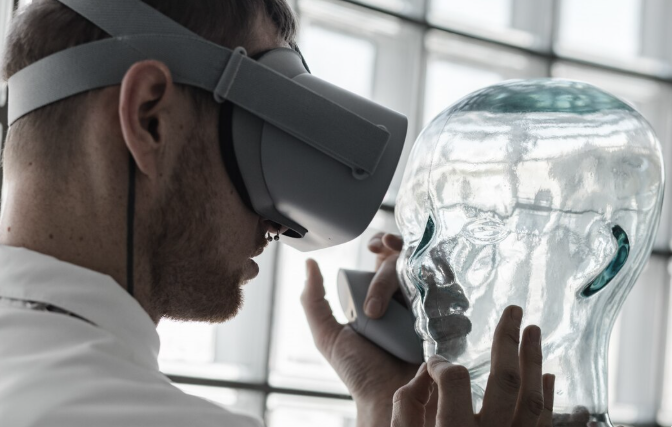
AI-Hilbert, a research tool developed by scientists at Imperial College London’s Business School in collaboration with colleagues from IBM and Samsung, quietly re-derived Kepler’s Third Law of Planetary Motion at some point in the last few years using a set of data and current physical theory. No one gave it the solution.
From the evidence, it made its way there. Next, it applied Einstein’s Law of Relativistic Time Dilation in the same way. These are two of the most thoroughly examined, fundamental findings in scientific history. The system correctly identified them, demonstrated that they were consistent with current theory, and completed the task without delusional shortcuts.
| Central development | AI is reshaping every stage of the scientific method — hypothesis generation, experimental design, data analysis, and dissemination of results |
| Key research institution | Imperial College London Business School — research conducted with IBM and Samsung on AI-driven scientific law discovery |
| AI-Hilbert system | Named after mathematician David Hilbert; developed to derive scientific laws from datasets combined with existing theory — successfully re-derived Kepler’s Third Law of Planetary Motion and Einstein’s Law of Relativistic Time Dilation |
| The productivity problem | Research productivity in traditional science has been declining for decades; physicist Paul Dirac observed in the 20th century that “much of the low-hanging fruit” of discovery has already been picked |
| Computing growth context | Raw computing power increased by at least six orders of magnitude from 1991 to 2015, enabling data-driven approaches to discovery at scale |
| Key AI limitation | Current AI tools often fail to provide formal proofs for discovered relations and are prone to “hallucinating” incorrect scientific laws — AI-Hilbert addresses this by integrating background theory with data |
| Key journal warning (Nature, Jan 2026) | Nature Reviews Bioengineering editorial: AI’s entry into science “challenges us to rethink, and perhaps reinvent, our processes” — calling for AI checklists, transparency standards, and reproducibility frameworks |
| Narrowing diversity concern | Analysis of 41 million papers (Science/AAAS, Jan 2026): while AI expands individual researcher impact, it narrows collective scientific exploration — fewer novel research directions being pursued |
| Fields most affected | Drug discovery, materials science, genomics, climate modelling, particle physics, neuroscience, astronomy |
| Democratisation factor | Cloud-based AI and open-source models are giving researchers at under-resourced institutions access to analytical power previously limited to elite labs |
| Scientific method status | Established 17th century; not being replaced — being expanded; AI augments hypothesis generation and data analysis while human judgment guides meaning, ethics, and application |
| Reference / source | Imperial College London — How AI could usher in a new age of scientific discovery |
A search engine locating a Wikipedia article is not the same as this. AI-Hilbert is building a formal proof rather than merely finding a correlation, which is more akin to what a mathematician does. The distinction is important because one of the ongoing criticisms of data-driven AI in scientific research is that it identifies patterns without providing an explanation, leading to results that appear reliable but are not verifiable or falsifiable in the conventional scientific sense.
A model that indicates “these variables are correlated at 94% confidence” is helpful. Something significantly different is a model that can also demonstrate why and demonstrate how it functions in terms that are consistent with accepted physics.
It is awkward to discuss the larger context of this type of work, but it is important to do so. For a long time, scientific discovery has become more challenging. Decades ago, physicist Paul Dirac stated bluntly that while a second-rate physicist could perform first-rate work in the early days of quantum mechanics, it was now difficult for a first-rate physicist to perform second-rate work. Over the course of the 20th century, the low-hanging fruit of physics, chemistry, and biology gradually picked clean, leaving researchers climbing higher for each new result.
This is what Dirac was describing: the exhaustion of accessible problems. An analysis that appeared in Nature Reviews at the beginning of 2026 The introduction of AI into science, according to bioengineering, presents a challenge to “rethink, and perhaps reinvent, our processes.” Not a danger. An opportunity with pressures of its own.
The pressure is most obvious when it comes to drug discovery. For years, pharmaceutical labs have been using machine learning to screen molecular candidates. Before a single compound reaches a physical lab bench, thousands of virtual experiments are conducted. In certain situations, days of computational modeling can replace months of trial-and-error.
Experiments that don’t work out don’t go away; instead, they improve the model’s predictions. Early in 2026, one of the more progressive biomedical research institutions in the US, the Gladstone Institutes in San Francisco, characterized AI as “empowering scientists, allowing us to go faster and make more insightful discoveries.” The majority of working researchers currently choose that framing—empowering rather than replacing—possibly because it is more accurate and politically simpler than the alternatives.
However, an analysis of 41 million research papers that was published in Science in January 2026 revealed a significant counterweight: although AI tools have increased the influence of individual researchers, they seem to have reduced the overall scope of scientific inquiry. To put it another way, while AI is speeding up the exploration of current avenues, fewer avenues are being investigated overall.
The mainstream is amplified by the tool, and the eccentric hypothesis that ends up being correct may be suppressed. This is a serious issue. Some of the most significant scientific discoveries in history, such as the structure of DNA, the germ theory, and the role of prions in illness, were made by individuals who dared to explore concepts that the majority did not agree with. That kind of outlier thinking might not be well-suited to a research ecosystem that has been AI-optimized for the most statistically promising directions.
Observing these discussions unfold across academic departments and journal editorial boards gives the impression that science is undergoing a change that no one fully anticipated or controls. These are really difficult questions: Who is in charge of an AI-generated hypothesis that sends a lab down a costly wrong path? How can a model that is constantly updating be made to meet reproducibility standards? When the “author” of an analysis is partially a system trained on the reviewed literature, what does peer review even mean?
Since the 17th century, organized human inquiry has been framed by the scientific method. It has embraced the printing press, the computer, and the internet, evolving each time without losing its fundamental principles of observation, hypothesis, testing, and revision. Instead of being a breakthrough, AI might be another example of this kind of adaptation.
Additionally, the speed and scale that AI brings may put pressure on the institutions that support the method—journals, peer review, and reproducibility standards—in ways that they aren’t currently designed to withstand. Both appear to be worthwhile considerations. This appears to be understood by the researchers who developed AI-Hilbert. They named their system in honor of mathematician David Hilbert, who was a strong proponent of formal proof. The name serves as a reminder that finding the solution is insufficient. You must present your work.
