

Before a word is said, a picture from the school tells you everything. Scarlett West was a happy, healthy teenager who enjoyed riding her horse and performing well in school. According to her father, Marlon, she had an academic background, a strong social circle, and an apparently typical life. It’s the kind of detail that sticks in your memory because what transpired next was anything but typical.
Scarlett was attacked by a gang at a Greater Manchester bus station when she was fourteen years old. There was neither a dramatic crisis nor an instant kidnapping. Compared to that, it was slower and more unsettling. She drifted closer to her attackers because she thought it would be safer to make friends with them than to fight them. She was then groomed by an older female group member, who led her into a network of men who would rape her over sixty times before she turned eighteen.
During those years, Marlon West, 51, a former advanced nurse practitioner in NHS mental health services, was in a controlled state of desperation. He spent the night driving around Greater Manchester in an attempt to find her. He followed her to a Derbyshire property and pleaded with the police to come. They informed him that Scarlett was “safe” with her groomer and “her friends.” He was enraged. Anyone would be. However, anger had nowhere to go in this situation.
He was unable to keep her safe at home when she was fifteen, so he made what he describes as the most difficult decision of his life: putting her in foster care. She went missing once more within a week of turning sixteen and being forced to leave the care system.
According to West, the groomer had been “literally waiting for her.” After that, she was trafficked all over the nation, including to Bradford, Birmingham, and London. She was once discovered in a Rochdale property with crack cocaine and heroin. Because she was listed as a trafficking risk in a Home Office database, she was detained but never charged.
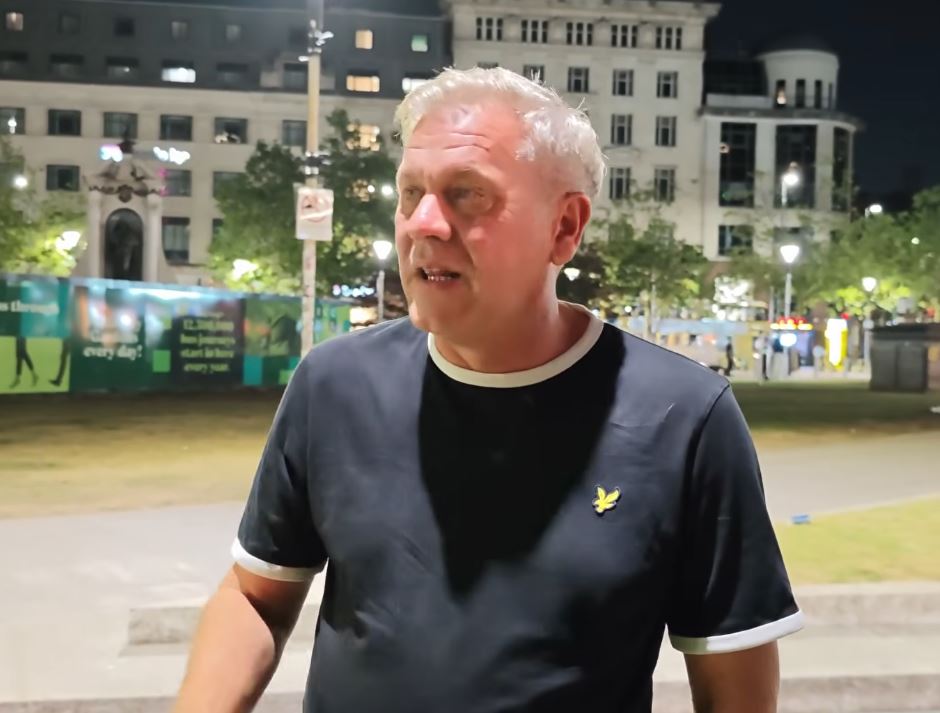
West thinks that his daughter’s aging out of the abusers’ interest contributed to the abuse’s eventual slowdown. It’s hard to sit with that detail alone. Now 20 years old, Scarlett and her father wrote a book about their experiences called In Plain Sight, but West is cautious not to refer to her as a survivor in the traditional sense. “The reason being is they’re still living with the trauma every day,” he said. The argument isn’t semantic. It accurately captures a continuous reality.
The fact that Scarlett’s background was so unremarkable makes her case especially problematic for institutions. Regarding that, West has been straightforward. He claims that groomers don’t stand outside school gates, sorting people based on parental occupation or family income. They are unconcerned. That’s it once they decide on a target. He believes that the belief that girls from dysfunctional households or children in foster care are the ones who are exploited is precisely what made it possible for this to go on for so long.
In the middle of 2025, Greater Manchester Police declared that 714 victims and survivors were the subject of live grooming investigations. Although West openly called for an investigation into Scarlett’s case, he made it clear that he thought the force was “still failing.” It’s possible that incremental progress is both real and still inadequate.
After Andy Burnham entered Parliament in June 2026, the Restore Britain party nominated West as its candidate for the Greater Manchester mayoral election. It is a unique political origin story by any standard. West does not pursue a career in politics. He is a father who decided that the institutions that failed his teenage daughter needed to be changed from the inside out after spending years driving around in the dark in search of her. It remains to be seen if that conviction results in votes in the election in July. However, Greater Manchester and the nation are still figuring out how to respond to his claim that civic leadership and accountability for child protection are inextricably linked.
