

The slightly awkward ritual of starting a game from the desktop, closing the notification that wants to update your drivers, clicking past the launcher that appeared inside the other launcher, and finally, eventually, entering the actual game is a moment that anyone who grew up playing PC games will recognize. It’s a procedure so well-known that it hardly registers anymore. It seems that Microsoft has been observing and has come to the conclusion that enough is enough.
Xbox mode will be available on all Windows 11 computers starting in April 2026. Not just portable gaming devices. Not only Insider preview builds. Every one of them: tablets supported on stands, laptops on kitchen tables, and desktop computers in home offices. Previously known as Xbox Fullscreen Experience, the feature is essentially a console-style dashboard that runs directly on top of Windows. It has been tested in secret among members of the Windows Insider program since November 2025. The familiar cluttered desktop vanishes when you hit a key combination. The interface that takes its place is controller-optimized, full-screen, clean, and designed for leaning back rather than leaning in, much like an Xbox console.
Key information — Xbox mode for Windows 11
| Feature name | Xbox mode (formerly Xbox Fullscreen Experience) — a controller-optimized, full-screen gaming interface for Windows 11 |
| Developer | Microsoft Corporation — announced at GDC 2026 by Ian LeGrow, Corporate VP for Windows and Devices |
| Official rollout date | April 2026 — staged deployment beginning in select markets, expanding gradually to all regions |
| Compatible devices | All Windows 11 form factors — desktops, laptops, tablets, and handheld gaming PCs including the Asus ROG Xbox Ally X |
| Original platform | First developed for Windows 11 gaming handhelds; now expanded to the full Windows PC ecosystem |
| How to activate | Press Windows key + G to open Game Bar → Settings → “Enter full screen experience” — or use Windows key + F11 to toggle directly |
| Interface design | Console-style full-screen dashboard — browse game library, launch titles, open Game Bar, and switch apps without keyboard or mouse |
| Key hardware context | Rise of handheld gaming PCs (ROG Ally, Lenovo Legion Go, Steam Deck) exposed that Windows was never built for controllers |
| Broader strategy | Part of Microsoft’s push to unify Xbox and PC gaming through Game Pass, cloud gaming, and deeper ecosystem integration with AMD, Intel, NVIDIA, and Qualcomm |
| Previous beta access | Xbox Fullscreen Experience available to Windows Insider program members since November 2025 — full public rollout begins April 2026 |
It’s difficult to ignore how much Microsoft has been working toward this goal for years without explicitly stating it. In addition to its traditional console business, the company has been actively pursuing Game Pass subscriptions, growing cloud gaming, and investing in PC gaming infrastructure. For the better part of ten years, the distinction between “Xbox” and “Windows gaming” has been gradually, almost cautiously, eroding. Exactly, Xbox mode isn’t surprising. It’s more like the inevitable event that has finally materialized because of the hardware.
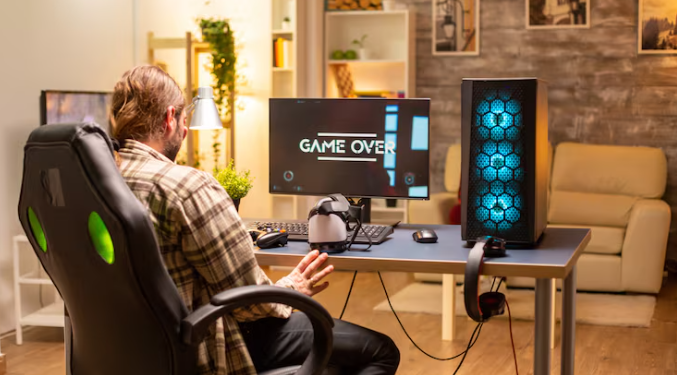
The hardware narrative is important. The Lenovo Legion Go, the Asus ROG Ally, and Valve’s Steam Deck before them all revealed something that Microsoft’s own documentation had long refrained from making clear: Windows was never made with controllers in mind. With its tiny touch targets and menus that presume a mouse is nearby, using a thumbstick to navigate Windows while running a Steam Deck is incredibly annoying. By creating its own interface layer, Valve circumvented it. Now, Microsoft is doing the same thing, but simultaneously across all device categories and at the operating system level. Even though the announcement was made at GDC 2026 with comparatively little fanfare, the scope of that is actually noteworthy.
The Xbox mode interface on a regular Windows desktop is confusing in the best way, according to early testing. After activation, the game library looks tidy, games can be browsed using a gamepad, and the whole gaming experience is more akin to using a console than anything Windows has ever provided. It’s not a one-way door; you can return to the standard desktop whenever you need to. However, the initial experience that a new user would have has changed. That’s the part you should focus on. More than options, defaults influence behavior.
It would be dishonest not to register because there is a legitimate skepticism about doing so. Microsoft’s track record of following through on Windows gaming features is not entirely spotless. In between update cycles, features subtly fade, become buried in menus, and are introduced with bold announcements. Just the branding history—Xbox One, Xbox Series X/S, Xbox Fullscreen Experience, and now just Xbox mode with a lowercase m—indicates a company that occasionally puts shipping ahead of coherence. The degree to which Microsoft continues to develop Xbox mode after the initial rollout will likely determine whether it becomes a genuine part of how millions of PC gamers interact with Windows or if it becomes a checkbox feature that enthusiasts occasionally show off to houseguests.
However, the overall picture appears to be heading in a certain direction. Given how crowded the market has become, Microsoft’s explicit statement that its goal is to make Windows 11 the best platform for developers to build, ship, and scale games would have sounded like corporate boilerplate six or seven years ago, but it now reads more like a sincere competitive position. The distribution of PC games is still dominated by Valve. In addition to taking market share that could have gone to Microsoft, the Steam Deck legitimized handheld PC gaming. At least in part, Xbox mode seems to be a reaction to witnessing that and choosing to prevent the next category from emerging without a Windows-native solution.
Looking through the Reddit threads and enthusiast forums in response to this announcement, the gaming community seems to be cautiously interested rather than instantly excited. The response is measured in a way that suggests earned skepticism, which is not indifference but rather a wait-and-see attitude that Microsoft has earned over the years. Early testing shows that the feature is functional. Whether it sticks is the question. That response will start in April rather than end in April.
